Best Sausage and Sage Stuffing for Rich Savory Holiday Flavor
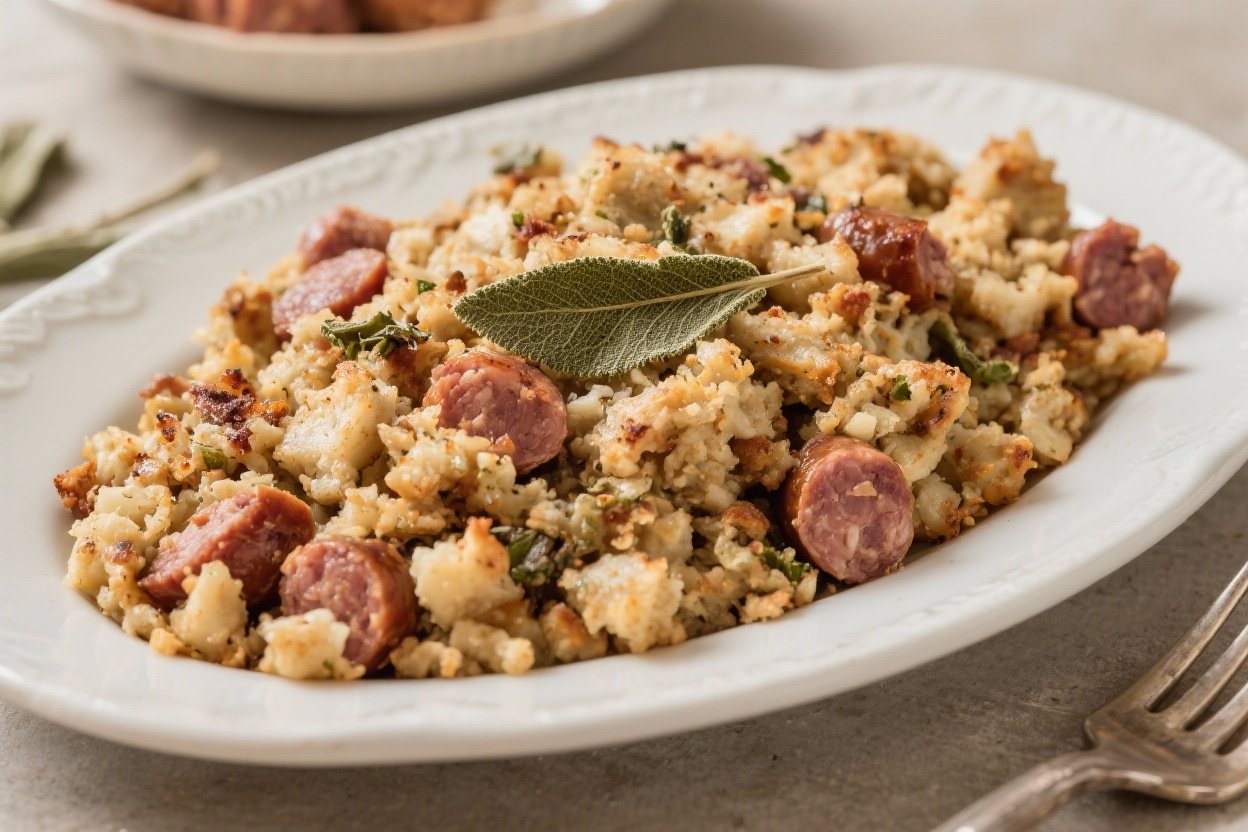
This classic stuffing brings together toasted bread, savory sausage, and fragrant sage for a side dish that tastes like holidays and home. It’s hearty without being heavy, and it holds its own next to turkey, chicken, or a simple roast. The edges turn golden and crisp, while the middle stays soft and custardy.
It’s simple to make ahead, easy to tweak, and always a crowd-pleaser. If you’re looking for a reliable, flavorful stuffing, this one checks every box.
Why This Recipe Works
The secret is balance: dry, sturdy bread absorbs broth and butter without turning mushy, while sausage adds richness and a savory backbone. Fresh sage and thyme bring classic holiday aroma, and a bit of celery and onion keep things bright.
Beaten eggs help bind the stuffing so it slices neatly but still stays soft inside. A quick bake uncovered at the end gives you that coveted crispy top.
What You’ll Need
- 1 1/2 pounds day-old bread (French, Italian, or a country loaf), cut into 3/4-inch cubes
- 1 pound bulk pork sausage (mild or sweet; use spicy if you like heat)
- 1 large onion, finely chopped
- 3–4 celery stalks, finely chopped
- 4 tablespoons unsalted butter
- 2–3 tablespoons fresh sage, finely chopped (or 2 teaspoons dried)
- 1 tablespoon fresh thyme leaves (or 1 teaspoon dried)
- 2–3 cups low-sodium chicken or turkey broth, warmed
- 2 large eggs, lightly beaten
- Salt and black pepper, to taste
- Olive oil or butter, for greasing the baking dish
- Optional add-ins: 1/2 cup chopped fresh parsley, 1/2 cup dried cranberries, 1/2 cup toasted pecans, 1/2 cup diced apple
Step-by-Step Instructions
- Prep the bread. Spread the bread cubes on two baking sheets. Toast in a 300°F (150°C) oven for 20–30 minutes, stirring once, until dry and lightly golden.Let cool. This step ensures the bread soaks up flavor without becoming soggy.
- Cook the sausage. In a large skillet over medium heat, cook the sausage, breaking it into small pieces, until browned and cooked through, 7–10 minutes. Transfer to a large mixing bowl, leaving a little fat in the pan.
- Sauté the aromatics. Add butter to the skillet.Stir in onion and celery with a pinch of salt. Cook over medium heat until softened and translucent, 8–10 minutes. Add sage and thyme; cook 1 minute until fragrant.
Scrape everything (and any flavorful bits) into the bowl with sausage.
- Combine with bread. Add the toasted bread cubes to the bowl. Toss gently to distribute sausage and vegetables evenly. If using parsley, cranberries, nuts, or apple, fold them in now.
- Add liquid and eggs. Pour in 2 cups of warm broth and the beaten eggs.Season with 1 teaspoon salt and 1/2 teaspoon pepper to start. Toss until the bread is evenly moistened. Let the mixture sit 5 minutes so the liquid absorbs.
- Adjust moisture. Check a few cubes.If the centers are still dry, add broth 1/4 cup at a time until the bread is moist but not wet. You want a mixture that holds together when pressed but doesn’t ooze liquid.
- Transfer and rest. Grease a 9×13-inch baking dish. Spoon in the stuffing and gently press to level, keeping the surface loose and craggy for extra crisp bits.Let sit 10 minutes to hydrate while the oven preheats to 350°F (175°C).
- Bake covered. Cover with foil and bake for 25–30 minutes to heat through and set the center.
- Crisp the top. Remove foil and bake another 15–20 minutes, until the top is golden-brown and crisp around the edges. If you like it darker, broil for 1–2 minutes, watching closely.
- Rest and serve. Let the stuffing rest 10 minutes for cleaner scooping or slicing. Taste and finish with a sprinkle of salt, pepper, or chopped parsley if you like.
Keeping It Fresh
To make ahead, assemble the stuffing through step 7, cover tightly, and refrigerate up to 24 hours.
Add 1/4–1/2 cup extra warm broth before baking if it seems dry. For leftovers, store in an airtight container for up to 3 days.
Reheat covered in a 325°F (165°C) oven until hot, 15–20 minutes for individual portions or 25–30 minutes for a larger pan. For a crisp top, uncover for the last 5 minutes.
You can also freeze baked stuffing for up to 2 months; thaw in the fridge overnight and reheat as above.
Benefits of This Recipe
- Reliable texture: Dry bread and a two-stage bake create a crisp top and tender interior.
- Big, familiar flavor: Sausage and sage deliver classic holiday taste without extra fuss.
- Make-ahead friendly: Assemble early and bake when you’re ready, freeing up oven time.
- Flexible base: Works with different breads, add-ins, and spice levels.
- Scalable: Doubles easily for a crowd; bake in two pans to keep edges crisp.
Pitfalls to Watch Out For
- Soggy stuffing: Overly soft bread or too much broth can turn it mushy. Aim for evenly moist, not wet.
- Dry stuffing: Not enough liquid or overbaking can dry it out. Check moisture before baking and cover for the first bake.
- Underseasoning: Bread dulls flavors.Taste a spoonful of the mixture and adjust salt, pepper, and herbs before baking.
- Overcrowded pan:</-strong> A very deep pan can steam the stuffing. Use a larger or second dish to ensure crisp edges.
- Skipping the rest: Resting before and after baking helps hydration and cleaner servings.
Variations You Can Try
- Apple and cranberry: Fold in 1 cup diced tart apple and 1/2 cup dried cranberries for sweet-tart pops.
- Mushroom umami: Sauté 12 ounces sliced cremini or shiitake with the onions for earthy depth.
- Herb-forward: Increase fresh sage to 1/4 cup and add rosemary for a woodsy note.
- Spicy Italian: Use hot Italian sausage, add red pepper flakes, and finish with grated Parmesan.
- Gluten-free: Use a sturdy gluten-free loaf; toast cubes extra well to dry them thoroughly.
- Turkey drippings: Replace part of the broth with pan drippings for a richer, savory flavor.
- Oyster stuffing twist: Stir in 1 cup drained, chopped oysters and reduce broth slightly.
FAQ
Can I use pre-cubed stuffing mix?
Yes. Choose unseasoned cubes so you can control salt and herbs.
Toast briefly if they feel soft, and adjust broth slowly since mixes vary in absorbency.
What’s the best bread for stuffing?
Sturdy, neutral loaves like French, Italian, sourdough, or country white hold up best. Avoid very soft sandwich bread unless you toast it very dry. A mix of white and sourdough gives great texture and flavor.
Do I have to use eggs?
No, but eggs help bind and create a custardy interior.
Without eggs, use a bit more broth and pack the mixture slightly firmer. The stuffing will be looser but still tasty.
How do I keep it moist when baking with the turkey?
Bake the stuffing separately. If you want turkey flavor, stir in some warm drippings.
Baking on its own lets you control moisture and guarantees safe cooking temperatures.
Can I make it vegetarian?
Absolutely. Swap sausage for sautéed mushrooms or plant-based sausage, and use vegetable broth. Boost seasoning with extra herbs, a splash of soy sauce, or a pinch of nutritional yeast for depth.
How do I know when it’s done?
The center should be hot and set, and the top golden-brown.
If you like numbers, the internal temperature should reach at least 165°F (74°C).
Can I assemble and freeze it unbaked?
Yes. Assemble, wrap tightly, and freeze up to 2 months. Thaw overnight in the fridge, add a splash of warm broth if needed, then bake as directed, adding 10–15 minutes to the covered bake time.
What if I only have breakfast sausage links?
Remove the casings and crumble the meat as it cooks.
If it’s maple-flavored, reduce any sweet add-ins to keep the balance right.
Wrapping Up
This Classic Stuffing with Sage and Sausage delivers the golden edges, savory depth, and cozy aroma everyone wants on a holiday table. With simple techniques and flexible ingredients, it’s easy to make ahead and even easier to love. Serve it once, and it’ll become your go-to side for turkey dinners, roast chicken nights, and any meal that calls for comfort.