How to Decorate Classic Gingerbread Cookies Like a Pro
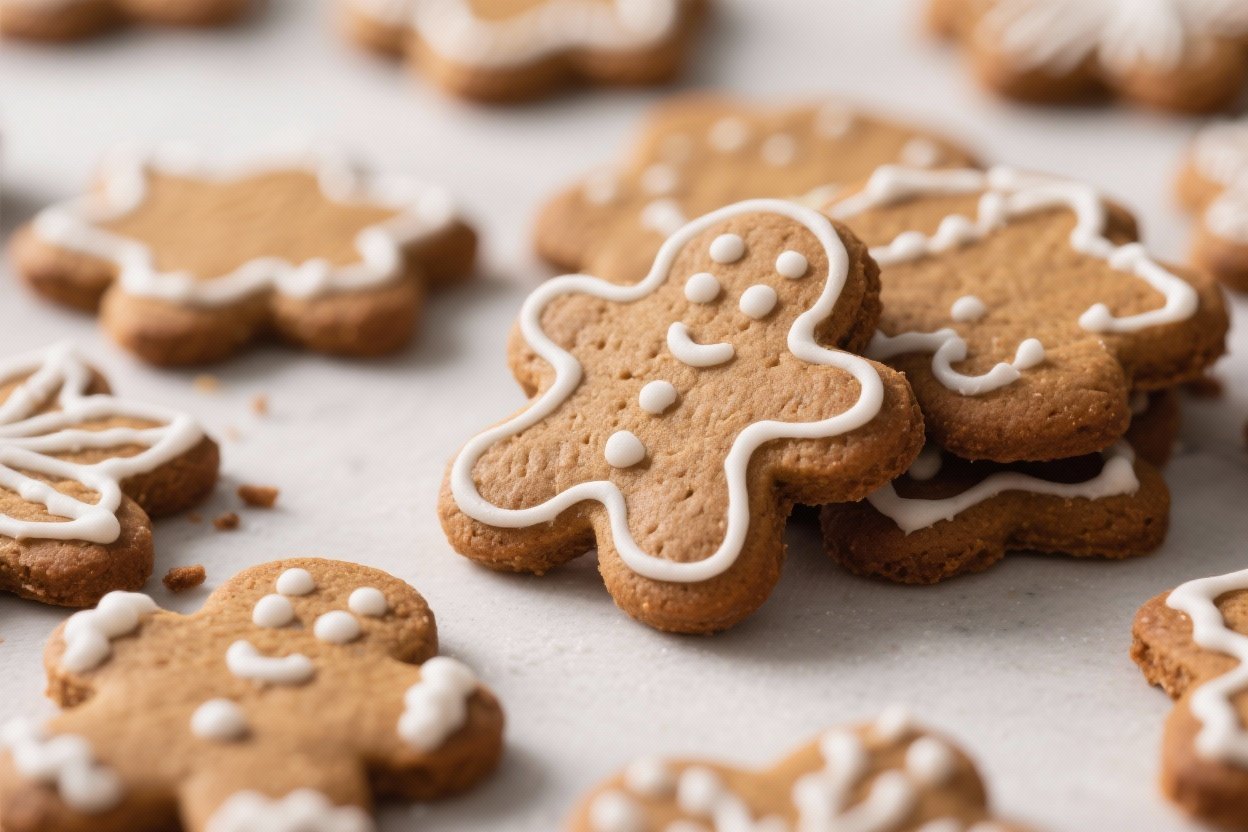
Gingerbread cookies are the kind of bake that makes a house feel like a home. They smell incredible, taste even better, and invite everyone to grab a cookie cutter and join in. This version keeps things classic: warm spices, deep molasses flavor, and a dough that’s easy to roll and holds shape.
They bake up with crisp edges and a soft center—just right for decorating or dunking in tea. Whether you’re baking for the holidays or just because, these are the cookies that bring people to the kitchen.
What Makes This Special
These cookies balance molasses richness with a cozy blend of ginger, cinnamon, and cloves. The dough is sturdy enough for shapes but stays tender after baking.
A touch of brown sugar adds caramel notes and helps keep them soft for days. The spices are assertive but not harsh, so everyone—kids included—can enjoy them. And the dough chills well, making it perfect to prep ahead if you’re hosting or baking in batches.
Shopping List
- All-purpose flour – 3 1/4 cups (plus extra for rolling)
- Unsalted butter – 3/4 cup (softened, 1 1/2 sticks)
- Brown sugar – 1/2 cup (packed; light or dark)
- Molasses – 2/3 cup (unsulfured)
- Egg – 1 large
- Baking soda – 1 teaspoon
- Salt – 1/2 teaspoon
- Ground ginger – 1 tablespoon
- Ground cinnamon – 1 1/2 teaspoons
- Ground cloves – 1/2 teaspoon
- Ground nutmeg – 1/4 teaspoon (optional but nice)
- Vanilla extract – 1 teaspoon
- Powdered sugar – for icing (about 2 cups)
- Milk or water – for icing (2–3 tablespoons)
- Lemon juice or vanilla – a splash for icing flavor
- Sprinkles or candies – optional for decorating
Instructions
- Cream butter and sugar. In a large bowl, beat the softened butter with the brown sugar until light and creamy, about 2–3 minutes.
This traps air and helps the cookies bake evenly.
- Add wet ingredients. Mix in the egg, molasses, and vanilla. The mixture may look slightly separated—that’s fine.
- Combine dry ingredients. In a separate bowl, whisk flour, baking soda, salt, ginger, cinnamon, cloves, and nutmeg until evenly blended.
- Make the dough. Add the dry mixture to the wet ingredients in two additions. Mix just until no streaks of flour remain.
The dough will be soft but not sticky.
- Chill. Divide dough in half. Flatten each portion into a disk, wrap in plastic, and chill for at least 1 hour (or up to 48 hours). Chilling makes rolling easier and improves flavor.
- Preheat and prep. Heat the oven to 350°F (175°C).
Line baking sheets with parchment paper.
- Roll it out. On a lightly floured surface, roll one dough disk to about 1/4 inch thick. Rotate the dough and dust with a touch of flour as needed to prevent sticking.
- Cut shapes. Use cookie cutters to cut hearts, stars, trees, or classic gingerbread people. Place shapes on the prepared baking sheets, about 1 inch apart.
- Bake. Bake 8–10 minutes, depending on size.
For softer cookies, pull them when edges are set but centers still look slightly soft. For crisper cookies, add 1–2 minutes.
- Cool. Let cookies rest on the sheet for 5 minutes, then move to a wire rack to cool completely before decorating.
- Make simple icing. In a bowl, whisk powdered sugar with 2 tablespoons milk or water and a splash of lemon juice or vanilla until smooth and thick, like school glue. Add more liquid a few drops at a time if needed.
- Decorate. Pipe the icing using a small piping bag or a zip-top bag with a tiny corner snipped.
Add sprinkles while the icing is wet. Let icing set until firm.
Storage Instructions
Store cookies in an airtight container at room temperature for up to 1 week. If you like them softer, add a slice of bread to the container; it keeps moisture in the cookies.
For longer storage, freeze undecorated cookies for up to 2 months, with parchment between layers. Thaw at room temperature, then decorate. You can also freeze the dough disks for 3 months; thaw in the fridge overnight before rolling.
Why This is Good for You
These cookies aren’t health food, but they do have some perks.
Ginger and cinnamon bring natural anti-inflammatory and digestive benefits, and the spices add big flavor without needing excessive sweetness. Making cookies at home lets you control the ingredients—real butter, quality molasses, and no mystery additives. Plus, baking is a relaxing, hands-on activity that’s great for sharing time with family and friends.
It’s good for the spirit, which counts too.
What Not to Do
- Don’t skip chilling the dough. Warm dough sticks, spreads, and loses sharp edges.
- Don’t overbake. Gingerbread firms up as it cools. If they look fully dry in the oven, they’ll be hard later.
- Don’t overload with flour while rolling. Too much flour makes tough cookies. Light dusting is enough.
- Don’t use blackstrap molasses. It’s more bitter and can overpower the cookies.
Use unsulfured regular molasses.
- Don’t decorate warm cookies. Icing will melt and slide off. Cool completely first.
Alternatives
- Softer, cake-like cookies: Add 1 tablespoon milk to the dough and bake on the shorter end of the time range.
- Extra spicy: Increase ginger to 1 1/2 tablespoons and add a pinch of black pepper for warmth.
- Gluten-free: Use a 1:1 gluten-free flour blend with xanthan gum. Chill longer and roll gently.
- Dairy-free: Swap butter for a good-quality vegan butter.
Choose a brand with at least 75–80% fat for best texture.
- Orange twist: Add 1 tablespoon finely grated orange zest to the dough. It brightens the molasses flavor.
- Maple icing: Replace some liquid in the icing with maple syrup and reduce added liquid slightly to keep it thick.
- Ornament cookies: Use a straw to poke a hole near the top before baking. After cooling, thread ribbon through the hole.
FAQ
How do I keep gingerbread people from spreading?
Chill the cut shapes on the baking sheet for 10–15 minutes before baking.
Also, make sure your butter isn’t overly soft and measure flour accurately. Cookies spread when the dough is too warm or too wet.
What’s the best thickness for rolling?
About 1/4 inch works for sturdy cookies with soft centers. For smaller, crisper shapes, roll closer to 1/8 inch and reduce baking time by a minute.
Can I make the dough ahead?
Yes.
The dough can chill for up to 48 hours. If it’s very firm when you’re ready to roll, let it sit at room temperature for 10–15 minutes to soften slightly.
Why are my cookies tough?
Overmixing after adding the flour can develop gluten and toughen the dough. Mix until just combined, and avoid adding too much flour when rolling.
Which molasses should I buy?
Choose unsulfured regular or “original” molasses.
Avoid blackstrap unless you like a strong, bitter edge. Brands labeled mild or robust both work; robust gives deeper flavor.
How do I make icing that hardens?
Use a higher ratio of powdered sugar to liquid so the icing is thick but pipeable. Let decorated cookies sit uncovered until the surface is dry to the touch, then store.
Can I use white sugar instead of brown sugar?
You can, but brown sugar adds moisture and caramel notes that improve both flavor and texture.
If substituting, expect slightly crisper cookies.
How do I fix sticky dough?
If the dough feels sticky after chilling, knead in 1–2 tablespoons of flour. Work gently so you don’t make the cookies tough.
Wrapping Up
Classic Gingerbread Cookies are simple, nostalgic, and endlessly fun to decorate. With the right chill time, a steady hand with the spices, and a watchful eye in the oven, you’ll get cookies that taste as good as they look.
Keep a batch on hand for gifting, snacking, or stringing on the tree. They’re the kind of tradition you’ll want to repeat every year.