Your Complete Guide to Making Burger-Ready Caramelized Onion Relish
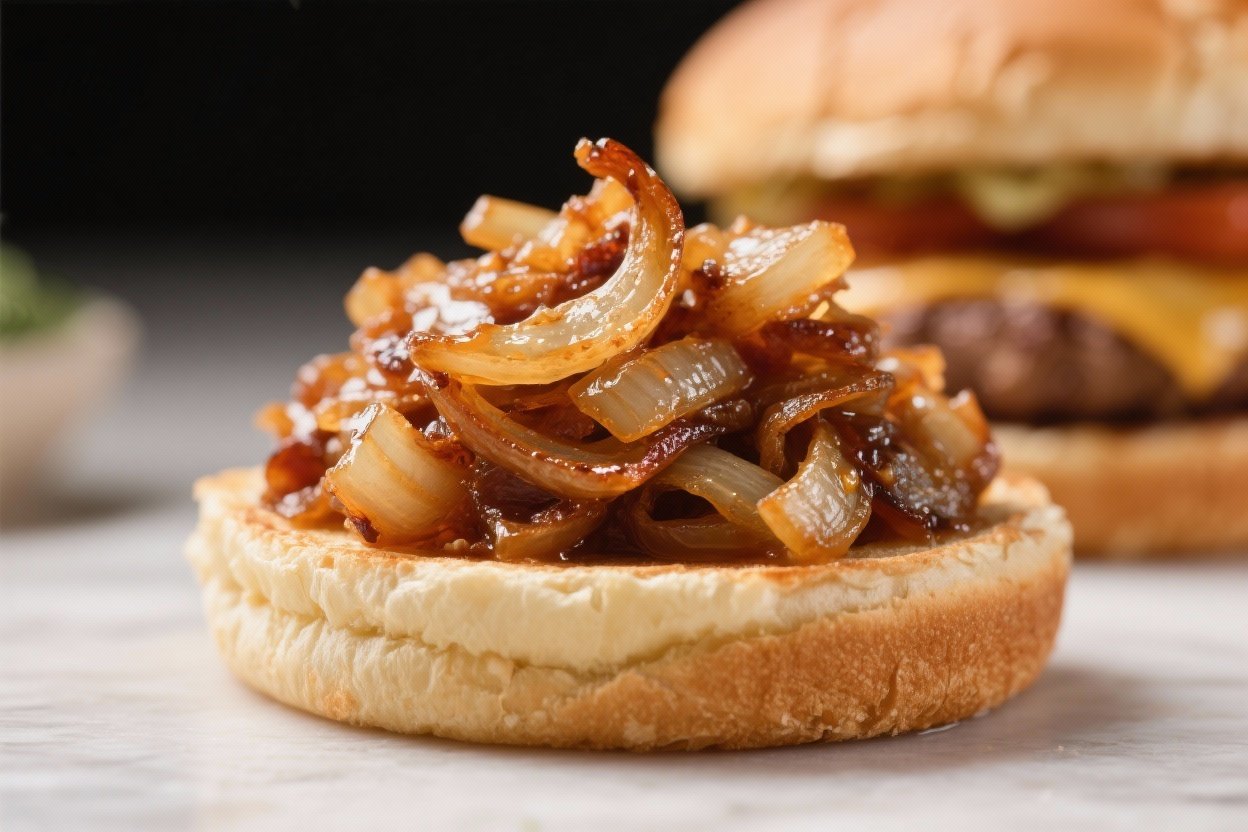
Caramelized onion relish turns a good burger into a great one. It brings a deep, sweet-savory flavor that plays perfectly with beef, cheese, and all your favorite fixings. This version is simple, reliable, and big on flavor, with just a handful of pantry staples.
You don’t need fancy equipment or special skills—just a skillet, some patience, and a few onions. Once you make it, you’ll want a jar in your fridge at all times.
Why This Recipe Works
This relish builds flavor slowly and steadily. The onions cook low and slow until their natural sugars develop and turn golden, which gives you that rich, jammy finish.
A splash of vinegar and a touch of mustard balance the sweetness and add brightness. A little brown sugar helps consistency and caramelization without making it taste like dessert. The result is a glossy relish that spreads easily and clings to burgers instead of sliding off.
Shopping List
- Yellow or sweet onions (3 large; about 2 pounds)
- Unsalted butter (2 tablespoons)
- Olive oil (1 tablespoon)
- Kosher salt (about 1 to 1½ teaspoons, to taste)
- Black pepper (½ teaspoon, freshly ground)
- Brown sugar (1 to 2 teaspoons, optional but recommended)
- Balsamic vinegar (1 tablespoon)
- Apple cider vinegar (1 tablespoon; for brightness)
- Dijon mustard (1 teaspoon)
- Garlic (1 clove, minced; optional)
- Thyme (½ teaspoon dried or 1 teaspoon fresh, optional)
Step-by-Step Instructions
- Prep the onions. Cut off the ends, peel, and slice the onions pole to pole into thin half-moons, about 1/8 to 1/4 inch thick.
Keep the slices even so they cook at the same rate.
- Heat the pan. Set a large, wide skillet over medium heat. Add the butter and olive oil. When the butter melts and foams, you’re ready to add onions.
- Start the cook. Add the onions and sprinkle with 1 teaspoon salt.
Toss to coat. Spread them out in an even layer so they have good contact with the pan.
- Go low and slow. Reduce heat to medium-low. Cook, stirring every few minutes, for 25 to 30 minutes.
If the onions start browning too quickly, lower the heat. If they seem dry, add a teaspoon of water.
- Encourage caramelization. When the onions are soft, deep golden, and smell sweet, stir in the brown sugar (start with 1 teaspoon), black pepper, and garlic (if using). Cook 2 to 3 minutes to melt the sugar and mellow the garlic.
- Deglaze and balance. Add the balsamic and apple cider vinegar.
Scrape up any browned bits from the pan. Cook 2 to 3 more minutes, until slightly syrupy.
- Finish with mustard and herbs. Stir in the Dijon and thyme. Taste and adjust salt, pepper, or an extra splash of vinegar if you want more tang.
The texture should be jammy and spreadable.
- Cool and serve. Let the relish cool for 10 minutes before spooning onto burgers. It thickens as it cools, which helps it stay put.
Storage Instructions
- Refrigerator: Store in an airtight container for up to 1 week. The flavor often improves after a day.
- Freezer: Freeze in small portions (ice cube trays or 1/2-cup containers) for up to 3 months.
Thaw overnight in the fridge or gently rewarm in a skillet.
- Reheating: Warm over low heat with a teaspoon of water to loosen if needed.
Benefits of This Recipe
- Big flavor, simple ingredients: You likely have everything on hand already.
- Make-ahead friendly: Prepare it in advance and focus on grilling when guests arrive.
- Versatile: Works on burgers, sausages, grilled cheese, steak, and roasted vegetables.
- Budget-friendly: Onions are inexpensive, but the result tastes gourmet.
- Customizable: Easy to tweak for sweetness, acidity, or spice.
Pitfalls to Watch Out For
- Heat too high: Onions will scorch and turn bitter. Keep the heat at medium-low once they’re sweating.
- Rushing the process: True caramelization takes time—usually 35 to 45 minutes total. Push it, and you’ll get sautéed onions, not relish.
- Skipping salt early: Early seasoning helps draw out moisture and speeds up softening.
- Neglecting the pan: Stir occasionally to prevent sticking, but don’t over-stir—contact with the pan promotes browning.
- Too much sugar: Sugar is a helper, not the star.
Use it sparingly to avoid candy-like sweetness.
Recipe Variations
- Smoky Bacon Onion Relish: Cook 3 slices chopped bacon first. Remove and reserve the crispy bits, pour off excess fat (leave 1 tablespoon), and cook the onions in the drippings. Stir bacon back in at the end.
- Beer-Braised Onion Relish: Replace the vinegars with 1/3 cup dark beer.
Let it reduce until syrupy. Finish with a splash of apple cider vinegar for brightness.
- Maple-Thyme Relish: Swap brown sugar for 1 teaspoon pure maple syrup and use fresh thyme. Lovely with sharp cheddar on a burger.
- Spicy Onion Relish: Add 1/2 teaspoon crushed red pepper flakes or a minced jalapeño during the last 10 minutes of cooking.
- Red Onion and Red Wine: Use red onions and deglaze with 1/4 cup red wine plus 1 teaspoon red wine vinegar.
Deep color, elegant flavor.
- Balsamic Fig Twist: Stir in 2 tablespoons chopped dried figs in the final 5 minutes. Great for blue cheese burgers.
FAQ
What onions are best for this relish?
Yellow onions are the most reliable and balanced, with enough sweetness and a savory backbone. Sweet onions (like Vidalia) will caramelize beautifully but can get very sweet, so reduce the sugar and add extra vinegar to taste.
How long does it really take to caramelize onions?
Plan on 35 to 45 minutes from start to finish.
The exact time depends on your pan, heat level, and how thinly you sliced the onions. Low and slow is the key to a jammy texture and deep flavor.
Can I make this without butter?
Yes. Use all olive oil or swap in a neutral oil like avocado oil.
Butter adds richness and helps browning, but the relish will still be excellent without it.
Why add both balsamic and apple cider vinegar?
Balsamic brings sweetness and body, while apple cider vinegar adds a clean, bright edge. Together they balance the onions’ natural sugars without overpowering the dish.
How do I keep the relish from sliding off the burger?
Cook it until thick and jammy, then let it cool slightly before adding to the burger. Layer it under the cheese or directly on the patty so the cheese helps anchor it.
Can I scale the recipe?
Absolutely.
Use a larger skillet to avoid overcrowding, or cook in batches. Overcrowding traps steam and slows browning, so give the onions room.
Is brown sugar necessary?
No, but a small amount speeds up caramelization and helps with consistency. If your onions are very sweet, skip it and add an extra splash of vinegar instead.
What’s the best pan to use?
A wide stainless steel or cast-iron skillet is ideal for even browning.
Nonstick works too but won’t develop as many flavorful browned bits to deglaze.
Can I use this on things other than burgers?
Yes. It’s excellent on hot dogs, bratwurst, grilled cheese, steak sandwiches, roasted potatoes, pizzas, and even as a topping for baked brie.
How do I know when the onions are done?
They should be deep golden-brown, very soft, and glossy. When you drag a spatula through the pan, the onions should mound and hold together like a loose jam.
Final Thoughts
Caramelized onion relish is one of those small upgrades that make homemade burgers memorable.
With simple steps and steady heat, you get a big payoff: a savory-sweet, spreadable topper that feels restaurant-level. Make a batch on the weekend, stash it in the fridge, and your next burger night is already halfway to great. Once you taste it, you’ll wonder how you ever grilled without it.