How to Make Prime Rib Roast in the Oven
Prime rib roast is one of those show-stopping meals that feels special without being fussy. It’s rich, tender, and packed with flavor, and the oven does most of the work. With a simple seasoning, the right roasting method, and a good rest, you’ll get a browned crust and juicy, rosy center.
This guide keeps it straightforward, so you can focus on timing and technique instead of juggling complicated steps. Whether it’s for a holiday or a Sunday dinner, this roast delivers.
What Makes This Special
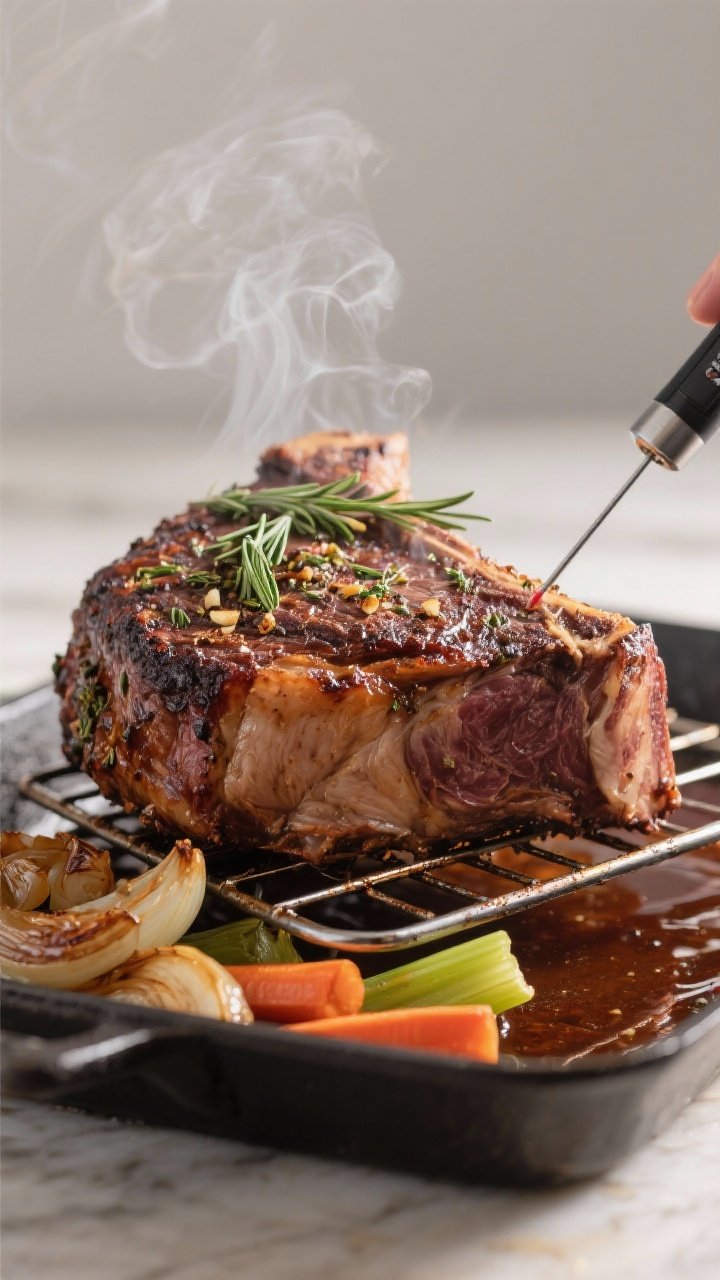
Prime rib is a naturally flavorful cut, thanks to its marbling and bone structure. You don’t need fancy ingredients to make it great—just salt, pepper, garlic, and herbs.
That combination builds a crisp, savory crust while the inside stays tender and silky. With the reverse-sear style oven method, you’ll get even cooking and a dramatic finish. It’s forgiving, consistent, and yields reliable results at home.
Shopping List
- Prime rib roast (standing rib roast), bone-in or boneless — 1 (5–7 pounds) for 6–8 servings
- Kosher salt — about 2–3 tablespoons, depending on size
- Freshly ground black pepper — 1–2 tablespoons
- Garlic — 4–6 cloves, minced (or 1–2 teaspoons garlic powder)
- Fresh rosemary — 2–3 tablespoons, chopped (or 2 teaspoons dried)
- Fresh thyme — 1–2 tablespoons, chopped (or 1 teaspoon dried)
- Olive oil or softened unsalted butter — 2–3 tablespoons
- Optional aromatics — 1 onion, halved; 2 carrots; 2 celery stalks
- Beef stock or broth — 1–2 cups for the pan and optional gravy
- Prepared horseradish or creamy horseradish sauce — for serving
Step-by-Step Instructions
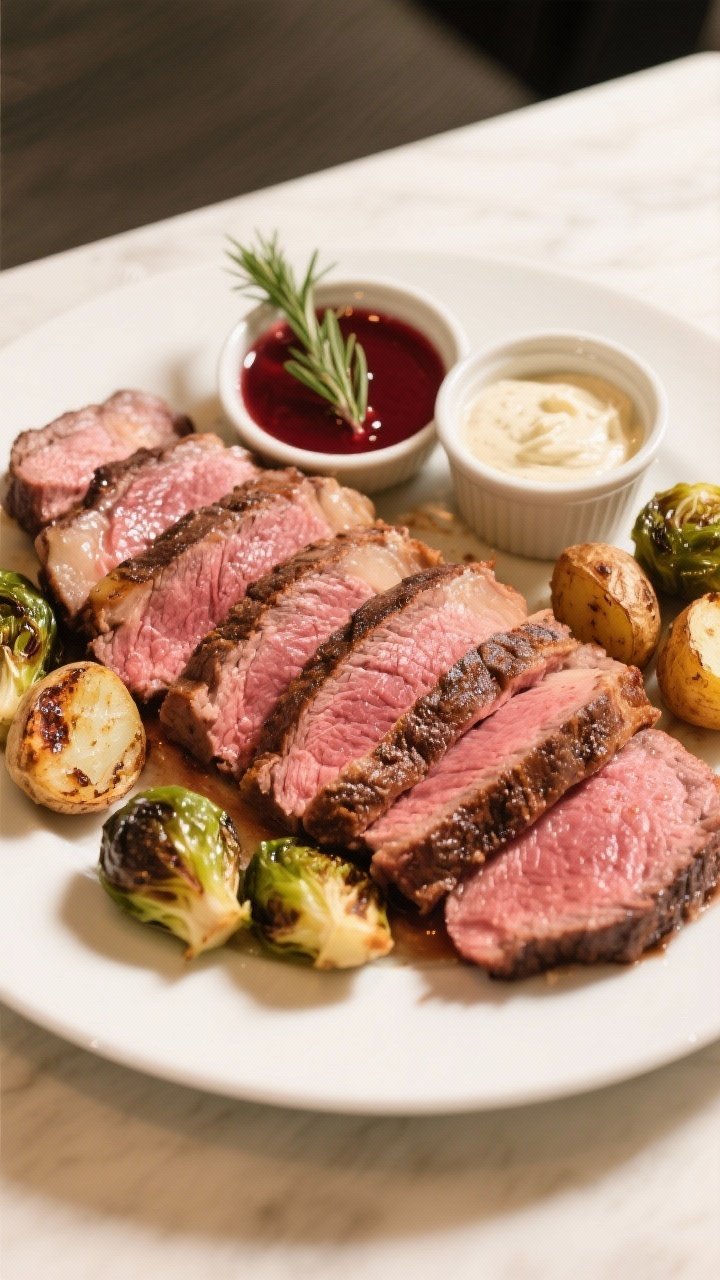
- Choose the right cut: Ask for a prime rib or standing rib roast.Bone-in retains moisture and adds flavor; boneless is easier to carve. Plan about 1 pound per person for bone-in, a bit less for boneless.
- Dry brine the roast: Pat the roast dry with paper towels. Season all over with kosher salt (be generous).Place uncovered on a rack set over a tray in the fridge for at least 12 hours, up to 48. This step enhances flavor and improves crust.
- Bring to room temp: Take the roast out 1–2 hours before roasting. This helps it cook evenly and prevents a cold center.
- Preheat the oven: Set to 250°F (120°C).Low and slow cooking gives you uniform doneness and less risk of overcooking.
- Make the herb rub: Mix black pepper, minced garlic, chopped rosemary, thyme, and olive oil or softened butter into a paste. Rub it all over the roast, including the ends and between ribs if bone-in.
- Set up the roasting pan: Place onion, carrots, and celery in the bottom of a roasting pan (optional). Add 1 cup of beef stock to catch drips and prevent smoking.Set a roasting rack on top and place the roast fat-side up.
- Insert a thermometer: Use a probe thermometer if you have one. Place it in the thickest part, avoiding bone and fat seams.
- Roast low and slow: Cook at 250°F until the internal temperature reaches your target minus 10–15°F for carryover and searing. For medium-rare, take it out at 115–120°F; for medium, 125–130°F.This can take 2–4 hours depending on size.
- Rest before searing: Remove the roast and tent loosely with foil for 20–30 minutes. Meanwhile, increase the oven to 500°F (260°C) or preheat a broiler.
- High-heat finish: Return the roast to the 500°F oven for 8–12 minutes to brown the crust. Watch closely.Pull when the surface is deep golden and crisp.
- Final rest: Let the roast sit another 15–20 minutes. This keeps juices from running out when carving.
- Make a quick jus (optional): Skim fat from the pan. Set the pan over medium heat on the stove, add stock to deglaze, and scrape up browned bits.Simmer for a few minutes and strain. Season with salt and pepper.
- Carve: For bone-in, cut along the ribs to remove the bones, then slice across the grain into 1/2–1-inch slices. For boneless, simply slice across the grain.
- Serve: Pair with the jus and a spoonful of horseradish.Add sides like mashed potatoes, roasted vegetables, or a crisp salad.
- You can also try Cajun Steak, it feels incredible too.
Storage Instructions
- Refrigeration: Store leftover slices in an airtight container for up to 4 days. Keep them in larger pieces to help retain moisture.
- Freezing: Wrap tightly in foil, then place in a freezer bag. Freeze up to 2 months.Thaw overnight in the refrigerator.
- Reheating: Warm gently in a 250°F oven covered with foil until heated through (about 15–20 minutes), or reheat slices sealed in a zip-top bag in a pot of hot (not boiling) water to keep them juicy.
- Leftover ideas: Use in steak sandwiches, beef and barley soup, hash with eggs, or mixed into a creamy pasta.
Health Benefits
Prime rib offers high-quality protein that supports muscle repair and satiety. It’s rich in iron and zinc, which help with energy levels and immune function. You’ll also get vitamin B12 and other B vitamins that support nerve health and metabolism.
This cut is higher in fat, so enjoy it in reasonable portions and balance your plate with vegetables and whole grains. Choosing sides like roasted Brussels sprouts or a leafy salad helps round out the meal.
What Not to Do
- Don’t skip the thermometer: Guessing leads to overcooked or undercooked meat. Temperature is your best friend.
- Don’t roast straight from the fridge: A cold roast cooks unevenly and can leave a cool center.
- Don’t slice too soon: Cutting immediately causes juices to spill out, leaving the meat dry.
- Don’t over-salt right before cooking: If you didn’t dry brine, season at least 45–60 minutes ahead or right before roasting to avoid drawing moisture to the surface.
- Don’t rely only on searing first: A hard sear at the start can create a gray band inside.Low-and-slow plus a hot finish yields a more even pink interior.
Variations You Can Try
- Mustard-Herb Crust: Mix Dijon mustard with garlic, rosemary, thyme, and pepper. Slather over the roast before the low roast. Adds tang and helps herbs stick.
- Coffee and Pepper Rub: Combine finely ground coffee, black pepper, brown sugar, and smoked paprika.This brings a subtle bitterness and deep color.
- Garlic-Parmesan Crust: Blend softened butter, grated Parmesan, garlic, and parsley. Apply for the final high-heat finish to form a savory crust.
- Red Wine Jus: Deglaze the pan with red wine, reduce by half, then add beef stock. Simmer and finish with a small knob of butter.
- Herb-Butter Basting: During the final sear, baste with melted butter infused with thyme and rosemary for a glossy finish.
FAQ
How many ribs should I buy for a crowd?
A three-rib roast (about 6–7 pounds) feeds 6–8 people.
Plan roughly one rib for every two people. If you want leftovers, round up.
What internal temperature should I aim for?
For medium-rare, pull at 115–120°F before the final sear and resting; it will rise to 125–130°F. For medium, pull at 125–130°F to finish around 135–140°F.
Always measure in the thickest part.
Bone-in or boneless—what’s better?
Bone-in can be slightly juicier and has a dramatic presentation. Boneless is easier to carve and cooks a bit faster. Flavor differences are minor; choose based on convenience and preference.
Can I season it the same day?
Yes.
If you can’t dry brine overnight, season liberally and let it sit at room temperature for 45–60 minutes before roasting. It won’t be quite as flavorful as an overnight brine, but it will still be excellent.
Do I need to tie the roast?
If boneless, tying helps it keep a uniform shape and cook evenly. For bone-in, a butcher may already have it tied.
If not, a few loops of kitchen twine around the middle will do.
Why use a low temperature first?
Low heat allows the roast to cook evenly from edge to center, minimizing the gray band and keeping more of the interior perfectly pink. The final blast of high heat builds that crust.
How do I avoid a smoky kitchen?
Keep some liquid in the roasting pan to catch drippings, trim any large dangling fat, and ensure your oven is clean. For the final high-heat finish, turn on ventilation and watch closely.
Can I cook this ahead?
You can roast to about 5–10°F below your target, cool slightly, and refrigerate.
Rewarm gently at 250°F until it reaches serving temperature, then do a quick high-heat finish. The texture is best when cooked and served the same day, but this method works for planning.
What side dishes go best?
Classics like mashed or roasted potatoes, creamed spinach, green beans, Yorkshire pudding, or a simple arugula salad all pair well. Horseradish sauce or a red wine jus adds brightness.
Can I use the same method for smaller or larger roasts?
Yes.
The technique is the same; only timing changes. Always cook to temperature, not just time, and give yourself a buffer in the schedule.
Final Thoughts
Prime rib roast rewards patience and simple technique. With good seasoning, a low-and-slow roast, and a hot finish, you’ll get a tender interior and a beautifully browned crust.
Use a thermometer, let it rest, and carve with confidence. It’s a classic for a reason—rich, satisfying, and easier than it looks.