Cabbage-Stuffed Pierogi – Simple Comfort Food You’ll Make Again
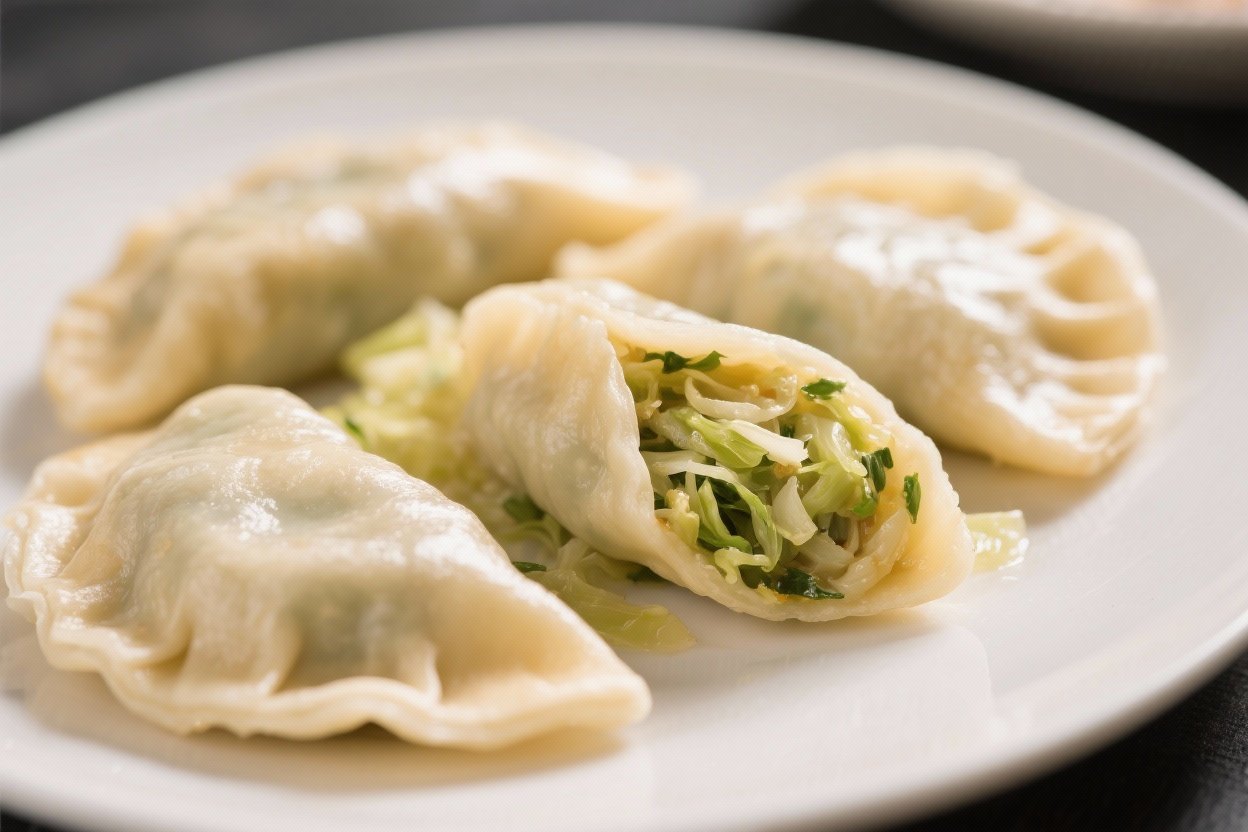
Pierogi are the kind of comfort food that make any table feel welcoming. This cabbage-stuffed version is humble, hearty, and deeply satisfying without being heavy. The dough is tender, the filling is savory and slightly sweet, and a quick pan-fry gives each dumpling a golden edge.
It’s a project, but not a hard one, and every step is simple. Make a batch for dinner, then freeze the rest—you’ll be glad you did.
Why This Recipe Works
These pierogi balance a soft, rich dough with a bright, flavorful cabbage filling. Sautéing the cabbage with onion and a touch of vinegar builds depth without using complicated spices.
A dash of butter and black pepper ties it all together. The dough uses sour cream for tenderness and elasticity, so it rolls thin without tearing. Finally, boiling then pan-frying delivers that perfect contrast: soft pillows with crisp, browned spots.
Ingredients
- For the dough:
- 3 cups all-purpose flour, plus extra for dusting
- 1 teaspoon fine salt
- 1 large egg
- 3/4 cup sour cream (full-fat preferred)
- 4 tablespoons unsalted butter, melted and slightly cooled
- For the filling:
- 2 tablespoons unsalted butter
- 2 tablespoons neutral oil (like sunflower or canola)
- 1 large onion, finely chopped
- 1 small green cabbage (about 2 pounds), cored and finely shredded
- 1 teaspoon fine salt, plus more to taste
- 1/2 teaspoon freshly ground black pepper
- 1–2 tablespoons apple cider vinegar (to taste)
- 1 teaspoon sugar (optional, to balance acidity)
- For cooking and serving:
- Salted water for boiling
- 2–3 tablespoons butter for pan-frying
- 1 small onion, thinly sliced and browned in butter (optional garnish)
- Sour cream and chopped chives or dill
How to Make It
- Mix the dough: In a large bowl, whisk the flour and salt.
In a separate bowl, whisk the egg, sour cream, and melted butter. Add wet ingredients to dry and stir with a fork until shaggy. Knead by hand 2–3 minutes until smooth.
Cover and rest 30 minutes so the gluten relaxes.
- Cook the onion: In a wide skillet, heat butter and oil over medium. Add chopped onion and a pinch of salt. Cook 8–10 minutes, stirring, until soft and lightly golden.
- Sauté the cabbage: Add shredded cabbage to the skillet.
Season with 1 teaspoon salt and the black pepper. Cook 12–15 minutes, stirring often, until cabbage is tender and reduced by about half.
- Balance the flavors: Stir in 1 tablespoon vinegar and the sugar, if using. Taste and adjust with more vinegar, salt, or pepper.
You want savory with a gentle tang. Let the filling cool completely; warm filling can make the dough sticky.
- Roll the dough: Divide dough into two balls. Working with one at a time on a lightly floured surface, roll to about 1/8 inch thick.
Keep the other piece covered so it doesn’t dry out.
- Cut rounds: Use a 3-inch cutter or glass to cut circles. Gather and re-roll scraps as needed.
- Fill and seal: Place about 1 tablespoon of cabbage filling in each round. Fold into a half-moon.
Pinch the edges firmly to seal, then crimp. If the dough is dry, lightly dampen the edge with water before sealing.
- Boil: Bring a large pot of salted water to a gentle boil. Drop in pierogi in batches.
Cook 2–3 minutes after they float, until the dough is tender. Remove with a slotted spoon and drain.
- Pan-fry (optional but recommended): Heat a skillet with a tablespoon of butter over medium. Add boiled pierogi and cook 2–3 minutes per side until golden in spots.
Don’t overcrowd; work in batches.
- Serve: Top with browned onions, a dollop of sour cream, and a sprinkle of chives or dill. Eat hot.
How to Store
- Refrigerate: Store cooked pierogi in an airtight container up to 3 days. Reheat in a buttered skillet to restore crisp edges.
- Freeze (uncooked): Arrange filled, uncooked pierogi on a parchment-lined sheet in a single layer.
Freeze until solid, then transfer to a freezer bag. Cook from frozen: boil a minute longer, then pan-fry.
- Freeze (cooked): Cool completely, freeze on a tray, then bag. Reheat directly in a buttered skillet over medium-low until warmed through.
- Prevent sticking: Toss cooked pierogi with a touch of oil or butter before storing.
Health Benefits
- Cabbage is nutrient-dense: It provides vitamin C, vitamin K, and fiber, which support immunity, bone health, and digestion.
- Onions add antioxidants: Quercetin and other compounds may help reduce inflammation.
- Balance your plate: Pair with a protein (like grilled sausage, beans, or eggs) and a simple salad to make a well-rounded meal.
- Moderate fats smartly: Butter adds flavor, but you can pan-fry in a mix of oil and butter or use less, if you prefer.
Pitfalls to Watch Out For
- Wet filling: If the cabbage is watery, the pierogi can burst.
Cook the filling down until moisture evaporates and cool it before filling.
- Overworked dough: Too much kneading makes it tough. Mix until smooth, then rest it so it rolls easily.
- Poor seal: Any gap can let water in. Press edges firmly and crimp.
Use a dab of water if needed.
- Rapid boil: A rolling boil can tear delicate dough. Keep the water at a gentle boil/simmer.
- Overcrowding the pan: When pan-frying, crowding steams the pierogi. Fry in batches for crisp, golden spots.
Recipe Variations
- Cabbage and Mushroom: Sauté sliced cremini or wild mushrooms with the onions for earthiness.
- Sauerkraut Twist: Replace half the fresh cabbage with drained sauerkraut for extra tang.
Rinse lightly if very sour.
- Cabbage and Potato: Fold in 1 cup mashed potatoes to make a creamier filling that stretches further.
- Spiced-Up: Add a pinch of caraway seeds or smoked paprika to the cabbage for a different flavor profile.
- Dairy-Free Dough: Swap sour cream for unsweetened thick plant yogurt and use oil instead of butter.
- Whole-Wheat Boost: Use 1 cup whole-wheat flour and 2 cups all-purpose for a heartier dough. Add an extra tablespoon of water if needed.
FAQ
Can I make the dough ahead?
Yes. Wrap the dough tightly and refrigerate up to 24 hours.
Let it sit at room temperature for 20–30 minutes before rolling so it softens.
What if I don’t have sour cream?
Use plain Greek yogurt (not nonfat) or a mix of milk and an extra tablespoon of butter. Sour cream gives great tenderness, but these swaps work.
Why are my pierogi sticking to the tray?
Use parchment and a light dusting of flour. After boiling, toss pierogi with a bit of oil or butter to prevent sticking while you work in batches.
How do I avoid dough tearing?
Roll evenly, not too thin, and make sure the filling is cool and not watery.
If the dough resists, let it rest another 10 minutes and try again.
Can I bake pierogi instead of pan-frying?
Boil them first, then brush with butter or oil and bake at 400°F (200°C) for 10–12 minutes until lightly crisp. The skillet gives better browning, but the oven is hands-off.
What should I serve with cabbage-stuffed pierogi?
Sour cream and herbs are classic. Try caramelized onions, crispy bacon bits, apple slaw, or a simple cucumber salad on the side.
Is red cabbage okay?
Yes, but it’s firmer and slightly sweeter.
Cook a few minutes longer and add a splash more vinegar to balance.
Can I steam frozen pierogi?
You can, but texture is best when boiled from frozen, then pan-fried. Steaming can make them a bit gummy.
Wrapping Up
Cabbage-stuffed pierogi deliver everything you want from a cozy meal: a tender dough, a savory filling, and just enough crispness to keep each bite lively. The steps are straightforward, and the ingredients are easy to find.
Make a double batch, freeze the extras, and you’ve got comfort on standby. Once you taste how good homemade pierogi can be, you’ll come back to this recipe again and again.