Easy Make Ahead French Toast Casserole
French toast casserole is the kind of breakfast that makes a morning feel special without a lot of effort. It’s warm, comforting, and perfect for lazy weekends or feeding a crowd. You get all the flavor of classic French toast with a soft, custardy center and a golden, crunchy top.
Best of all, you can prep it the night before and bake it when you wake up. If you like simple, satisfying food that brings people to the table, this one’s a keeper.
Why This Recipe Works
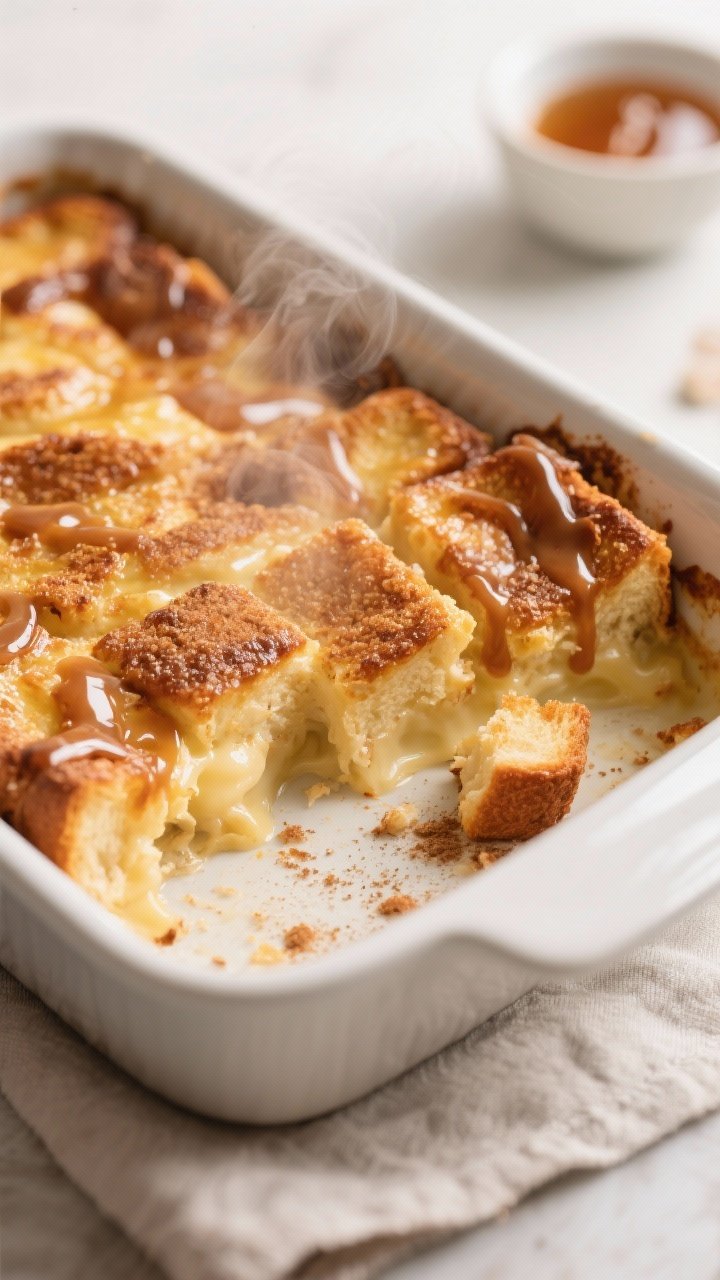
This casserole uses slightly stale bread, which soaks up the custard without turning mushy. That gives you a creamy middle and a crisp top.
The custard is rich but balanced—eggs for structure, milk and cream for softness, and vanilla and cinnamon for warmth. A buttery brown sugar topping bakes into a crunchy, caramelized crust. And because you assemble it ahead, the flavors marry overnight, and the bake is foolproof in the morning.
Shopping List
- Bread: 1 loaf (about 16 ounces) of day-old brioche, challah, or French bread
- Eggs: 8 large
- Milk: 1 1/2 cups (whole milk preferred)
- Heavy cream: 1/2 cup
- Granulated sugar: 1/3 cup
- Brown sugar: 1/3 cup (plus more for topping)
- Vanilla extract: 2 teaspoons
- Cinnamon: 2 teaspoons
- Nutmeg: 1/4 teaspoon (optional but nice)
- Salt: 1/2 teaspoon
- Butter: 4 tablespoons, melted (plus extra for greasing)
- Maple syrup: for serving
- Fresh berries or powdered sugar: optional for serving
How to Make It
- Prep your pan and bread: Grease a 9×13-inch baking dish with butter.
Cut the bread into 1–1.5 inch cubes. If your bread isn’t stale, spread the cubes on a sheet pan and bake at 300°F (150°C) for 10–12 minutes to dry slightly.
- Make the custard: In a large bowl, whisk the eggs, milk, cream, granulated sugar, brown sugar, vanilla, cinnamon, nutmeg, and salt until smooth and well combined.
- Assemble: Add the bread cubes to the baking dish. Pour the custard evenly over the bread, gently pressing the cubes to help them soak it up.
Let it sit for 10 minutes on the counter to start absorbing.
- Add the topping: Stir 2 tablespoons brown sugar into the melted butter and drizzle over the bread. This helps create a crisp, caramelized finish.
- Rest (overnight or quick soak): For best texture, cover and refrigerate for at least 4 hours or overnight. If you’re short on time, let it sit 30–40 minutes at room temperature, flipping a few top pieces so everything gets custardy.
- Bake: Preheat the oven to 350°F (175°C).
Uncover the casserole and bake for 40–50 minutes. It’s done when the top is golden and the center is set but still slightly soft.
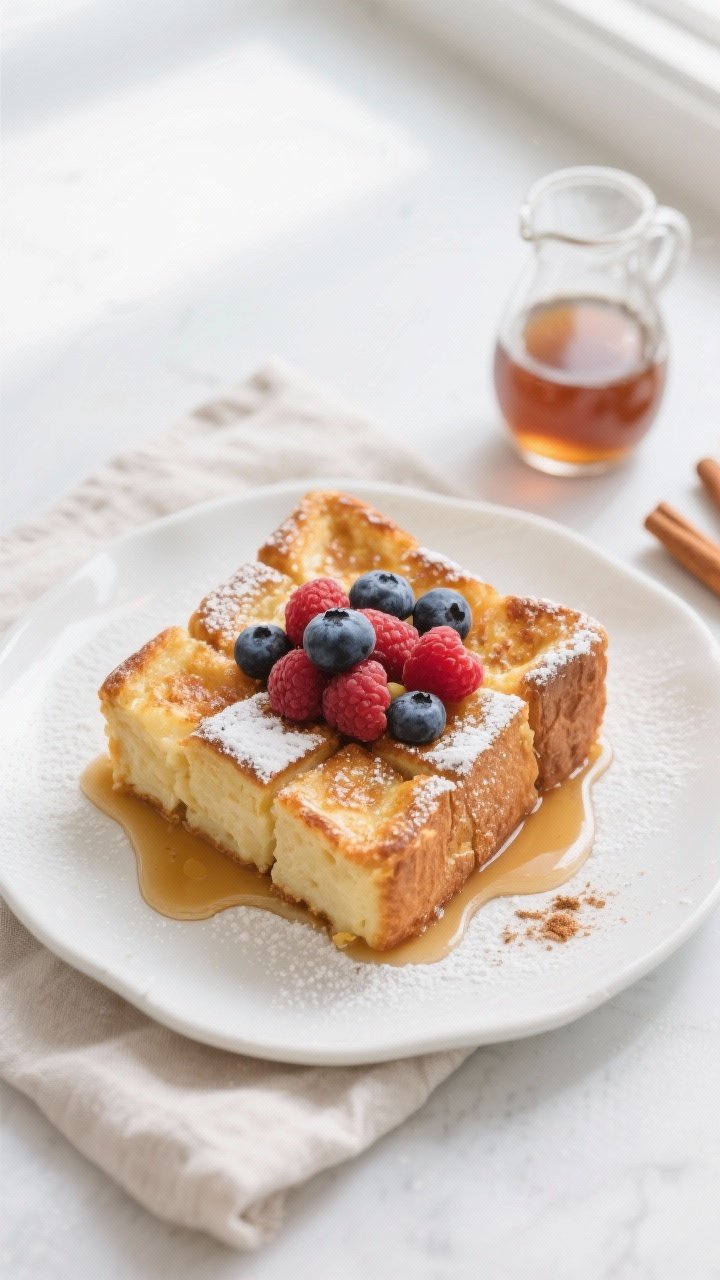
- Finish and serve: Let it rest for 5–10 minutes. Dust with powdered sugar, top with berries if you like, and serve warm with maple syrup.
Storage Instructions
Store leftovers in an airtight container in the fridge for up to 3 days.
Reheat individual portions in the microwave for 45–60 seconds or in a 325°F (165°C) oven for 10–15 minutes to re-crisp the top. You can freeze baked casserole in portions for up to 2 months; wrap tightly and thaw overnight in the fridge before reheating. Avoid freezing unbaked custard-soaked bread, as texture can turn soggy.
Benefits of This Recipe
- Make-ahead friendly: Assemble the night before and bake fresh in the morning.
- Great for a crowd: One pan serves 8–10 people with no flipping at the stove.
- Flexible ingredients: Works with different breads, spices, and toppings.
- Comforting and economical: Uses day-old bread and pantry basics to create something special.
- Kid and guest approved: Familiar flavors with a bakery-style finish.
What Not to Do
- Don’t use very fresh, soft bread without drying it.
It will collapse and go mushy.
- Don’t skip the salt. A small amount sharpens the sweetness and brings out flavor.
- Don’t overbake. If it dries out, you lose the custard-like center. Check at 40 minutes.
- Don’t drown it in syrup in the pan. Serve syrup at the table so the top stays crisp.
- Don’t forget to rest after baking. A brief rest helps it set and slice neatly.
Variations You Can Try
- Apple-Cinnamon: Layer thinly sliced apples between bread cubes and add a pinch of cloves. Bake until apples are tender.
- Blueberry Lemon: Fold in 1 1/2 cups fresh or frozen blueberries and add 1 teaspoon lemon zest to the custard.
- Pecan Praline: Mix 1 cup chopped pecans with 2 tablespoons melted butter and 2 tablespoons brown sugar; scatter on top before baking.
- Chocolate Chip: Sprinkle 3/4 cup chocolate chips over the bread for a dessert-leaning version.
Reduce sugar slightly if you prefer.
- Pumpkin Spice: Whisk 3/4 cup pumpkin puree into the custard and use pumpkin pie spice in place of cinnamon and nutmeg.
- Dairy-Light: Swap the cream for evaporated milk or half-and-half. Texture stays rich with fewer calories.
- Gluten-Free: Use a sturdy gluten-free loaf and ensure all mix-ins are GF certified.
- Savory Twist: Omit sugar and vanilla, use grated cheddar, herbs, and cooked sausage or mushrooms. Bake until set.
FAQ
What’s the best bread for French toast casserole?
Use something sturdy and slightly sweet like brioche or challah.
A crusty French loaf also works well. Day-old bread is ideal because it absorbs the custard without turning soggy.
Can I assemble it the morning of?
Yes. Let it soak at room temperature for 30–40 minutes, tossing a few pieces so everything gets coated.
The texture won’t be quite as custardy as an overnight rest, but it still works.
How do I know when it’s done?
The top should be golden and crisp, and the center should look set with a slight wobble. If you insert a knife in the center, it should come out mostly clean with a few moist crumbs.
Can I reduce the sugar?
Absolutely. Cut the granulated sugar to 1/4 cup and the brown sugar to 1/4 cup.
You can also skip the topping drizzle and rely on a light dusting of powdered sugar after baking.
What if I only have sandwich bread?
It can work if you dry it out first. Toast the slices, then cube them. You may need to reduce the custard slightly so it doesn’t oversaturate the bread.
Can I make it dairy-free?
Yes.
Use a rich non-dairy milk like full-fat oat or almond and swap the cream for coconut cream. Use a dairy-free butter alternative for greasing and the topping.
Why is my casserole soggy?
Too-fresh bread, too much custard, or underbaking are common causes. Use dry bread, press gently to soak, and bake until the center is set.
Let it rest before slicing.
How do I re-crisp leftovers?
Reheat in a 325°F (165°C) oven for 10–15 minutes. A quick finish under the broiler on low for 1–2 minutes brings back the crunchy top. Watch closely to avoid burning.
Can I add alcohol like rum or bourbon?
Yes—1 to 2 tablespoons in the custard adds depth.
Pair with warm spices and a brown sugar topping. Keep portions modest if serving kids.
What should I serve with it?
Bacon or sausage for saltiness, fresh fruit for brightness, and coffee or tea. A simple fruit salad or yogurt rounds out the meal without extra work.
Wrapping Up
French toast casserole delivers all the cozy breakfast vibes with very little fuss.
With make-ahead convenience and a golden, crunchy top, it’s a reliable choice for holidays, brunches, and easy weekends. Keep the basics the same, then play with flavors to make it your own. Once you make it a couple of times, it becomes second nature—and always worth waking up for.