
How to Create the Panettone French Toast – A Cozy, Festive Breakfast
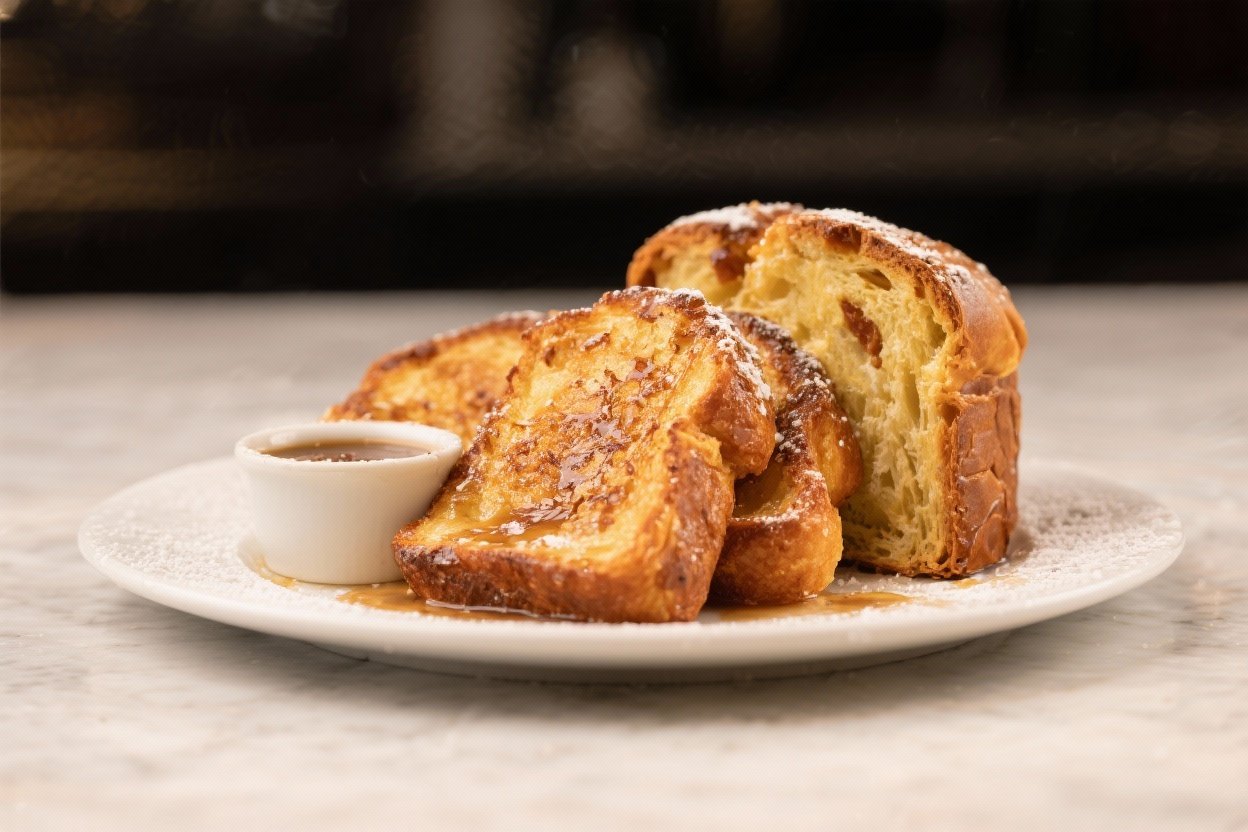
Panettone French toast is the kind of breakfast that makes a chilly morning feel special. You get the buttery, airy texture of Italian panettone paired with the custardy richness of classic French toast. It’s easy enough for a lazy weekend but elegant enough for holiday brunch.
Best of all, it makes great use of leftover panettone. Add a warm drizzle of maple syrup, a dusting of powdered sugar, and you’re in comfort-food heaven.
What Makes This Recipe So Good
- Panettone does the heavy lifting. This bread is already enriched with eggs, butter, and citrus or chocolate, so it transforms into a flavorful, tender French toast with minimal effort.
- Golden edges, custardy center. Thick slices soak up the custard without falling apart, giving you a crisp exterior and pillowy inside.
- Perfect for leftovers. Slightly stale panettone is ideal. It absorbs the custard better and browns beautifully.
- Quick but special. The process is simple, but the result tastes restaurant-worthy—great for holidays, guests, or when you want something a little extra.
- Flexible toppings. Maple syrup, citrus zest, whipped mascarpone, or even a berry compote all work beautifully.
What You’ll Need
- Panettone: About 8 thick slices (1 to 1.5 inches each).
Classic raisin-candied citrus, chocolate chip, or plain are all great.
- Eggs: 4 large, for a rich custard.
- Milk or half-and-half: 1 cup. For extra richness, use half-and-half or a mix of milk and cream.
- Vanilla extract: 1–2 teaspoons.
- Ground cinnamon: 1 teaspoon.
- Freshly grated nutmeg: A pinch (optional but lovely).
- Orange zest: 1 teaspoon, finely grated. Brightens the flavors and complements panettone’s citrus notes.
- Salt: A small pinch to balance sweetness.
- Butter: 2–3 tablespoons for the pan.
- Neutral oil: 1–2 tablespoons to keep the butter from burning.
- Maple syrup: For serving.
- Powdered sugar: For dusting.
- Optional toppings: Fresh berries, whipped cream or mascarpone, chopped toasted nuts, chocolate shavings, or a quick berry compote.
How to Make It
- Slice the panettone. Cut thick slices, about 1 to 1.5 inches, so they hold their shape when soaked.
If your panettone is very fresh and soft, let slices sit out for 15–20 minutes to dry slightly.
- Mix the custard. In a shallow dish, whisk the eggs, milk or half-and-half, vanilla, cinnamon, nutmeg, orange zest, and salt until smooth and well combined.
- Preheat the pan. Heat a large skillet or griddle over medium heat. Add a mix of butter and a little oil to the pan so the butter doesn’t scorch. You want a gentle sizzle, not smoke.
- Soak the slices. Dip each panettone slice in the custard for about 10–20 seconds per side, depending on how dense your bread is.
The goal is saturated but not collapsing. Let excess drip off.
- Cook until golden. Lay the soaked slices on the hot pan. Cook 2–4 minutes per side, until deep golden brown with crisp edges and a slightly puffed center.
Adjust heat if browning too fast.
- Finish in the oven (optional). For extra fluff, transfer cooked slices to a 300°F (150°C) oven for 5–7 minutes while you finish the batch. This sets the custard through the center.
- Serve warm. Plate with maple syrup, a dusting of powdered sugar, and any toppings you like. A dollop of lightly sweetened mascarpone and a bit of orange zest tastes amazing.
How to Store
- Refrigerator: Cool leftovers completely.
Store in an airtight container for up to 3 days.
- Freezer: Layer slices with parchment and freeze in a zip-top bag for up to 2 months. Press out air to prevent ice crystals.
- Reheat: Warm in a 325°F (165°C) oven or toaster oven for 8–10 minutes until heated through and re-crisped. Avoid microwaving if you want to keep the edges crisp.
- Make-ahead: Whisk the custard the night before and keep it chilled.
Slice the panettone in advance to save time in the morning.
Health Benefits
- Protein from eggs: The eggs provide protein, which helps make this indulgent breakfast more satisfying and balanced.
- Calcium and vitamin D: Using milk or half-and-half adds calcium and, if fortified, vitamin D.
- Portion control: Thick slices are filling, so one or two pieces can be enough—especially when served with fruit.
- Balanced add-ons: Add fresh berries or citrus segments for fiber and antioxidants, and choose a light drizzle of maple syrup instead of a heavy pour.
This is still a treat, of course. If you want to lighten it up, use milk instead of cream, skip extra sugar in the custard, and serve with fruit instead of whipped toppings.
What Not to Do
- Don’t oversoak. Panettone is airy. Too long in the custard and it can fall apart.
Aim for quick, even dipping.
- Don’t crank the heat. High heat burns the sugars before the center sets. Medium heat gives you that golden crust without scorching.
- Don’t skip the pinch of salt. It balances the sweetness and makes the flavors pop.
- Don’t use a dry pan. Butter plus a little oil prevents sticking and gives you that beautiful browning.
- Don’t crowd the pan. Cook in batches so steam can escape and edges get crisp.
Recipe Variations
- Chocolate lover’s version: Use chocolate chip panettone. Add a teaspoon of cocoa to the custard and finish with shaved chocolate and berries.
- Citrus and mascarpone: Mix mascarpone with a splash of orange juice, zest, and a bit of honey.
Dollop on warm slices and top with pistachios.
- Almond-crusted: Press one side of the soaked slice into finely chopped almonds before cooking. Toast in the pan until nutty and crisp.
- Berry compote topper: Simmer frozen mixed berries with a little maple syrup and lemon juice for 5–7 minutes. Spoon over the French toast.
- Spiked holiday brunch: Add a splash of Grand Marnier or amaretto to the custard for adults.
Keep heat gentle so the alcohol cooks off.
- Dairy-light: Use oat or almond milk and cook with coconut oil. The flavor pairs nicely with citrus and berries.
FAQ
Can I use fresh panettone?
Yes, but fresh panettone is very soft. Let slices sit out for 15–30 minutes, or toast them lightly before soaking so they don’t fall apart.
What if I don’t have panettone?
You can use brioche or challah.
The texture and richness will be close, though you’ll miss the citrus and raisin notes. Add extra orange zest to the custard to mimic the flavor.
How thick should I slice the bread?
About 1 to 1.5 inches. Thin slices can tear and get soggy, while very thick slices might not cook through without the oven finish.
Do I need sugar in the custard?
No.
Panettone is sweet enough. Keep the custard unsweetened and let toppings bring the sweetness. Maple syrup or powdered sugar is plenty.
Why mix butter with oil?
Butter adds flavor, but it burns quickly.
A little neutral oil raises the smoke point so you can brown the toast without bitterness.
Can I make this for a crowd?
Yes. Keep batches warm on a sheet pan in a 300°F (150°C) oven. This also helps set the custard evenly.
Serve family-style with toppings on the side.
How do I know it’s cooked through?
The center should feel springy, not wet, when pressed lightly. If the outside is browned but the center seems soft, finish in the oven for a few minutes.
What toppings go best?
Maple syrup, powdered sugar, fresh berries, orange segments, lemon curd, whipped cream or mascarpone, toasted almonds or pistachios, or even a drizzle of warm chocolate sauce.
Final Thoughts
Panettone French toast is a simple way to turn a beloved holiday bread into a cozy, memorable breakfast. The method is straightforward, and the results feel celebratory without being fussy.
Keep the custard balanced, don’t rush the browning, and finish with bright toppings to cut the richness. Whether you’re using up leftovers or planning a special brunch, this recipe brings warmth and a little bit of magic to the table.