How to Create the Perfect Mango Pudding Recipe
Mango pudding is the kind of dessert that makes everyone smile. It’s silky, lightly sweet, and full of bright mango flavor. You don’t need special skills or fancy tools—just a few basic ingredients and a blender.
Serve it after dinner, bring it to a potluck, or make it ahead for a relaxed weekend treat. It looks elegant but feels easy, which is exactly what a good dessert should be.
Why This Recipe Works

This version keeps things simple while maximizing flavor and texture. Fresh ripe mangoes do the heavy lifting, giving the pudding a natural sweetness and vibrant color.
A small amount of gelatin sets it to a soft, spoonable consistency—no baking or complicated steps. A splash of milk or coconut milk adds creaminess without making it heavy. The result is a refreshing dessert that tastes like sunshine and takes minimal effort.
Shopping List
- Ripe mangoes (about 3 large, or 2 cups of mango puree)
- Granulated sugar (adjust to taste depending on mango sweetness)
- Whole milk or coconut milk (for creaminess)
- Heavy cream (optional, for extra richness)
- Unflavored gelatin (powdered)
- Warm water (to bloom the gelatin)
- Fresh lime juice (or lemon juice, a little for brightness)
- Vanilla extract (optional, a small splash)
- Pinch of salt (to round out the flavor)
- Fresh mint, mango cubes, or berries (for garnish, optional)
Step-by-Step Instructions
- Prep the mangoes. Peel and pit the mangoes.Dice the flesh and measure 2 cups. Choose mangoes that smell fragrant and feel slightly soft when pressed.
- Blend the puree. Add mango to a blender with sugar, a pinch of salt, and lime juice. Blend until completely smooth.Taste and adjust sweetness.
- Bloom the gelatin. In a small bowl, sprinkle the gelatin over 1/4 cup warm water. Let it sit for 5 minutes until the granules absorb the water and swell.
- Warm the dairy. In a small saucepan over low heat, gently warm 1 cup milk and 1/2 cup cream (or use 1 1/2 cups coconut milk for a dairy-free version). Do not boil—just warm enough to steam.
- Dissolve the gelatin. Stir the bloomed gelatin into the warm milk mixture.Keep stirring until fully dissolved and the liquid looks clear. This step ensures a smooth set.
- Combine with mango. Pour the warm gelatin mixture into the blender with the mango puree. Add vanilla if using.Blend on low for 10–15 seconds to combine without adding too much air.
- Strain for extra silkiness. For the smoothest texture, pass the mixture through a fine mesh sieve into a large measuring cup or bowl.
- Portion and chill. Divide the mixture into 6–8 small glasses, ramekins, or molds. Cover and chill in the refrigerator for at least 4 hours, or until set. Overnight is ideal.
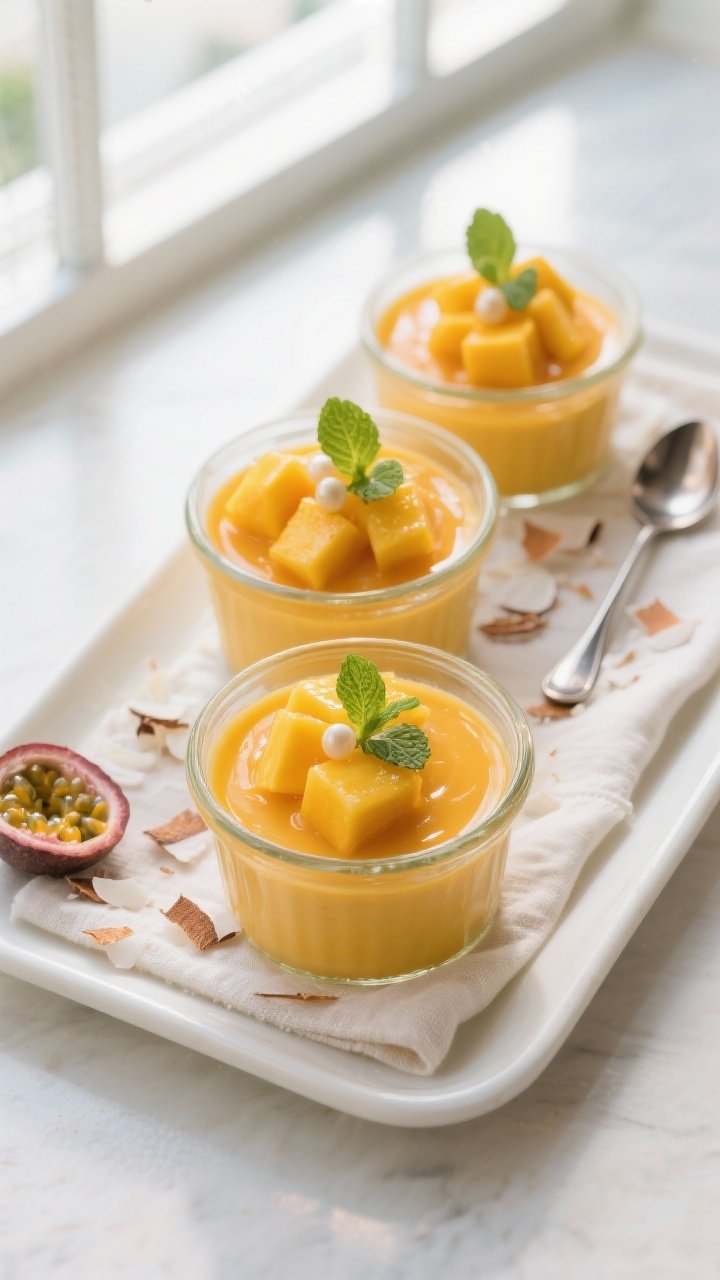
- Garnish and serve. Top with diced mango, a sprig of mint, or a few berries.Serve cold and enjoy the creamy, fruity goodness.
Storage Instructions
- Refrigerate: Keep covered and chilled for up to 3 days. The texture stays best within the first 48 hours.
- Do not freeze: Gelatin-based desserts don’t freeze well; they can turn watery after thawing.
- Keep toppings separate: Add fresh fruit right before serving to keep the surface neat and the fruit vibrant.
Why This is Good for You
Mangoes are rich in vitamin C, vitamin A, and antioxidants, which support immunity and skin health. This dessert offers a better-for-you option compared to heavier cakes or pastries, especially if you dial back the added sugar.
Using milk or coconut milk gives satisfying creaminess without needing a lot of fat. It’s a treat, but one that leans light and fresh.
What Not to Do
- Don’t add gelatin to boiling liquid. High heat can weaken its setting power and lead to a loose texture.
- Don’t skip the blooming step. Dry gelatin sprinkled straight into hot liquid can clump and never fully dissolve.
- Don’t use fibrous or stringy mangoes. The texture can turn grainy. If in doubt, strain the puree.
- Don’t over-sweeten early. Mango sweetness varies; taste after blending and add sugar gradually.
- Don’t rush the chill time. It needs several hours to set properly; plan ahead.
Recipe Variations
- Dairy-Free Coconut Mango Pudding: Replace milk and cream with full-fat coconut milk.The result is lush and tropical.
- Light and Tangy: Swap part of the milk with plain yogurt after the gelatin mixture cools slightly. Adds a gentle tang and protein boost.
- Mango Sago: Stir in cooked tapioca pearls (sago) after the mixture cools. Chill and serve for a fun, chewy texture.
- Layered Pudding: Alternate mango pudding with a layer of lightly sweetened coconut cream or a quick berry puree for a striking dessert.
- Spiced Upgrade: Add a pinch of cardamom, ginger, or lime zest to the puree for a fragrant twist.
- Agar-Agar Version: For a vegetarian set, use agar-agar instead of gelatin.Use about 1 to 1 1/2 teaspoons agar powder, simmer it in the milk for 2 minutes to activate, then mix with mango. Note it sets firmer than gelatin.
- Sugar Swaps: Use honey, maple syrup, or coconut sugar. Start with less and adjust to taste.
FAQ
How ripe should the mangoes be?
Choose mangoes that smell sweet and feel slightly soft when pressed.
If they’re hard or lack fragrance, the flavor will be flat. Riper mangoes give richer taste and smoother texture.
Can I use frozen mango?
Yes. Thaw completely and drain off any excess liquid before blending.
Taste and adjust sugar since frozen mango can be less sweet.
What if my pudding didn’t set?
It usually means the gelatin didn’t dissolve fully or the ratio was off. Gently rewarm a portion to dissolve more gelatin, then mix back in and chill. Next time, make sure to bloom and fully dissolve the gelatin in warm liquid.
Can I make it ahead?
Absolutely.
Make it the day before and chill overnight. Add toppings just before serving for the freshest look.
Is there a vegan version?
Yes. Use coconut milk or another plant milk and set with agar-agar instead of gelatin.
Remember that agar sets more firmly, so the texture will be slightly different.
How sweet should it be?
Aim for lightly sweet. Let the mango shine and add just enough sugar to balance any tartness. Always taste the puree and adjust before chilling.
Do I need to strain the mixture?
It’s optional but recommended.
Straining removes any fibrous bits and makes the pudding ultra-smooth, especially if the mangoes are slightly stringy.
What size servings work best?
Small portions go a long way. Use 4- to 6-ounce cups or ramekins. This recipe typically makes 6–8 servings.
Can I add toppings?
Yes—fresh mango cubes, passion fruit pulp, toasted coconut, or a dollop of lightly whipped cream all work well.
Keep toppings simple so they don’t overpower the mango.
How long does it last?
Up to 3 days in the fridge. After that, the texture can loosen and the flavor fades.
In Conclusion
Mango pudding is a simple, sunny dessert that feels special without being fussy. With ripe mangoes, a little dairy or coconut milk, and properly bloomed gelatin, you’ll get a silky, refreshing treat every time.
Make it ahead, serve it cold, and let the fruit do the talking. It’s the kind of recipe you’ll keep coming back to whenever you want something easy, bright, and crowd-pleasing.