How to Make Orange Glazed Roast Duck That Turns Out Crisp and Juicy
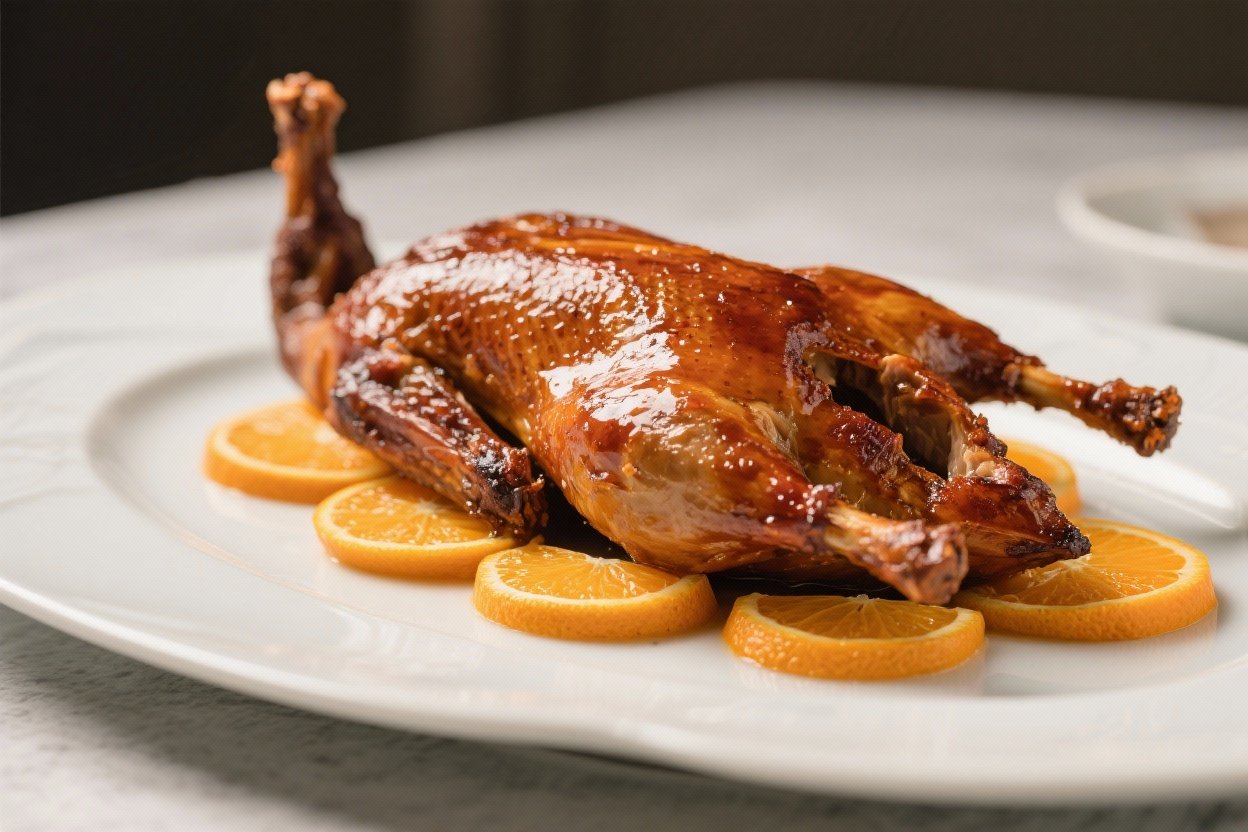
Roast duck with orange glaze is the kind of dish that turns dinner into an occasion. The skin is crisp, the meat is rich and tender, and the citrus glaze brings just the right balance of sweetness and brightness. While it looks impressive, it’s more approachable than you might think.
With a few smart tricks, you can get shatteringly crisp skin and a glossy, flavorful sauce. If you’re ready for a centerpiece that feels special without stress, this is it.
What Makes This Special
Duck has a natural richness that pairs beautifully with citrus. The orange glaze cuts through the fat, adding fresh aroma and a gentle sweetness.
Unlike chicken, duck has a higher fat content, which means deep flavor and juicy results if you render it properly. The method here is straightforward and forgiving, ideal for both first-timers and weekend cooks. The result is a restaurant-style dish that still feels warm and homemade.
Ingredients
- 1 whole duck (about 5–6 pounds), giblets removed
- 2–3 teaspoons kosher salt
- 1 teaspoon freshly ground black pepper
- 1 teaspoon baking powder (optional, for extra-crispy skin)
- 1 orange, cut into quarters
- 1 small onion, quartered
- 4 garlic cloves, smashed
- 4 sprigs fresh thyme (or 1 teaspoon dried)
- 1 bay leaf
- 1 cup low-sodium chicken stock (or duck stock, if available)
For the orange glaze:
- 1 cup fresh orange juice (from 2–3 oranges)
- 1 tablespoon finely grated orange zest
- 2 tablespoons honey or maple syrup
- 2 tablespoons brown sugar
- 2 tablespoons apple cider vinegar (or white wine vinegar)
- 1 tablespoon soy sauce
- 1 tablespoon Dijon mustard
- 1–2 teaspoons cornstarch mixed with 2 teaspoons water (optional, to thicken)
- Pinch of red pepper flakes (optional)
How to Make It
- Prep the duck. Pat the duck dry with paper towels, inside and out.
Trim excess skin and fat around the cavity. Prick the skin all over with a sharp skewer or the tip of a paring knife, avoiding the meat. This helps fat render out and ensures crisp skin.
- Season generously. Mix the salt, pepper, and baking powder (if using).
Rub the mixture all over the duck. Place the orange, onion, garlic, thyme, and bay leaf inside the cavity.
- Air-dry if possible. For the crispiest skin, set the duck uncovered on a rack over a sheet pan in the fridge for 8–24 hours. If you’re short on time, proceed without this step but dry the skin very well.
- Preheat and set up. Heat the oven to 425°F (220°C).
Place the duck breast-side up on a rack in a roasting pan. Pour the stock into the pan to catch drippings and reduce smoking.
- Roast in stages. Roast for 20 minutes at 425°F to jump-start rendering. Reduce the oven to 350°F (175°C) and continue roasting for 60–80 minutes.
Every 20–30 minutes, carefully spoon off excess fat and flip the duck: breast-side down halfway through, then back up for the final stretch.
- Make the glaze. While the duck roasts, combine orange juice, zest, honey, brown sugar, vinegar, soy sauce, Dijon, and red pepper flakes in a small saucepan. Simmer over medium heat for 8–12 minutes until syrupy. If you prefer a thicker glaze, stir in the cornstarch slurry and simmer 1–2 minutes more.
- Glaze and finish. When the duck reaches about 150°F (65°C) in the thickest part of the breast, brush with glaze.
Roast another 10–15 minutes, basting once or twice, until the skin is burnished and the breast reads 160°F (71°C). Legs and thighs should be higher, around 175°F–180°F (79°C–82°C), for tenderness.
- Rest before carving. Transfer the duck to a board and rest 15 minutes. This keeps the meat juicy and makes carving easier.
- Optional pan sauce. Skim the fat from the roasting pan (save it for potatoes).
Add a splash of water or stock and a tablespoon of glaze. Scrape up browned bits and simmer briefly. Taste and adjust seasoning, then strain.
- Carve and serve. Remove legs and thighs at the joints, then slice the breast meat.
Serve with extra glaze or the quick pan sauce.
Storage Instructions
- Refrigerate: Store leftover duck in an airtight container for up to 3 days. Keep the glaze separate if possible.
- Freeze: Shredded duck freezes well for up to 2 months. Thaw overnight in the fridge.
- Reheat: Warm gently in a 300°F (150°C) oven, skin-side up, until heated through.
Broil briefly to re-crisp the skin. Avoid microwaving, which softens the skin.
- Save the fat: Strain and refrigerate duck fat. It’s liquid gold for roasting potatoes and vegetables.
Benefits of This Recipe
- Balanced flavor: The glaze brightens the rich duck, so the dish feels satisfying, not heavy.
- Impressive yet doable: Clear steps and simple ingredients make it achievable for home cooks.
- Versatile leftovers: Shredded duck is great in tacos, fried rice, salads, or noodles.
- Restaurant-quality finish: Proper rendering and glazing produce crisp skin and a glossy, aromatic finish.
Common Mistakes to Avoid
- Skipping the pricking step: If the skin isn’t perforated, fat can’t render fully, and the skin won’t crisp.
- Not drying the skin: Moisture blocks browning.
Pat very dry, and air-dry if you can.
- Roasting at one temperature only: A hot start helps render fat, then a moderate temperature cooks the meat evenly.
- Over-reducing the glaze: It should be syrupy but brushable. If it gets too thick, loosen with a splash of orange juice or water.
- Skipping rest time: Carving too soon leads to dry meat and lost juices.
Alternatives
- Flavor swaps: Use blood oranges for a deeper citrus note, or add a splash of Grand Marnier for a classic touch.
- Spice variations: Add star anise, cinnamon, or a little five-spice to the glaze for a warm, aromatic edge.
- Citrus options: Try a mix of orange and grapefruit juice for a slightly bitter, complex finish.
- Cut of duck: Use duck legs instead of a whole bird. Roast at 350°F until tender (about 75–90 minutes), then glaze and finish under the broiler.
- No soy? Replace soy sauce with coconut aminos or a pinch of extra salt for savory depth.
FAQ
How do I know when the duck is done?
Use a meat thermometer.
Aim for about 160°F (71°C) in the breast and 175°F–180°F (79°C–82°C) in the thighs for tender, juicy meat. The skin should be deep golden and crisp.
Can I make the glaze ahead?
Yes. Make it up to 3 days ahead and store it in the fridge.
Rewarm over low heat and adjust thickness with a splash of water or orange juice if needed.
What should I serve with roast duck?
Roasted potatoes, crisp green beans, sautéed Swiss chard, or a simple arugula salad all work well. Something fresh and slightly bitter balances the richness beautifully.
Is there a way to reduce smoke while roasting?
Yes. Keep some stock or water in the roasting pan to catch drips, and spoon off excess fat during cooking.
Make sure your oven is clean and use a sturdy roasting pan with a rack.
Can I cook duck medium-rare like steak?
For a whole duck, it’s best to cook the breast to about 160°F to render fat and achieve crisp skin, while legs benefit from higher temperatures for tenderness. If cooking duck breasts separately, you can cook them to 135°F–140°F for medium-rare, skin-side seared in a pan.
What can I do with leftover duck fat?
Use it to roast potatoes, sear Brussels sprouts, or fry eggs. It adds incredible flavor and helps achieve crisp edges.
Final Thoughts
Roast duck with orange glaze feels festive, but the method keeps it manageable for any weekend dinner.
The key is dry skin, steady fat rendering, and a bright, glossy glaze. Once you try it, you’ll see how forgiving duck can be—and how rewarding. Keep the steps simple, trust your thermometer, and enjoy a beautifully balanced meal that tastes like a celebration.