Roast Turkey with Herb Butter and Gravy – A Simple, Flavor-Packed Centerpiece
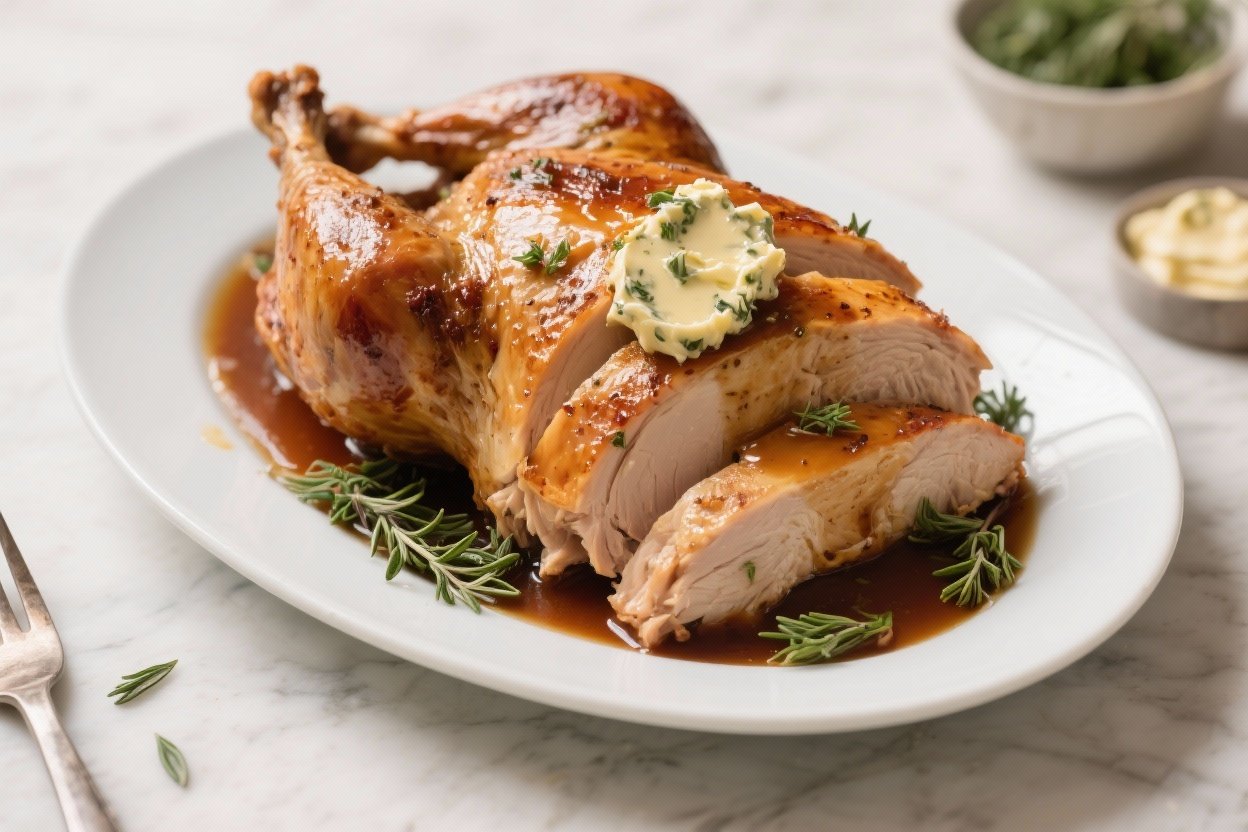
Roast turkey can be the star of a holiday table or a cozy Sunday meal. This version is all about juicy meat, crisp skin, and a gravy that tastes like it simmered all day. It’s straightforward, reliable, and doesn’t require fancy tools.
You’ll use herb butter to lock in moisture and layer in flavor from the inside out. With a few smart steps, you’ll end up with a turkey that’s savory, tender, and memorable.
Why This Recipe Works
This method uses an herb butter under and over the skin to keep the meat moist and flavorful. The butter melts slowly, basting the turkey as it roasts.
A quick high-heat blast at the start helps crisp the skin, while a lower temperature finishes the bird gently. Resting the turkey lets the juices redistribute so every slice is succulent. Finally, the pan drippings give you a rich gravy with minimal effort.
What You’ll Need
- Turkey: 12–14 lb whole turkey, thawed if frozen (remove giblets and neck)
- Unsalted butter: 1 cup (2 sticks), softened
- Fresh herbs: 2 tbsp chopped rosemary, 2 tbsp chopped thyme, 2 tbsp chopped sage, plus extra sprigs
- Garlic: 4 cloves, finely minced
- Lemon: 1 lemon, zested and halved
- Onion: 1 large, quartered
- Carrots and celery: 2 carrots and 2 celery stalks, chopped
- Olive oil: 1–2 tbsp
- Kosher salt and black pepper: to taste (plan on 2–3 tbsp salt total)
- Chicken or turkey stock: 4–6 cups, low-sodium
- Flour: 1/4 cup (for gravy)
- Dry white wine (optional): 1/2 cup for deglazing
- Bay leaves: 2
- Equipment: Roasting pan with rack, instant-read thermometer, foil, small saucepan, whisk
How to Make It
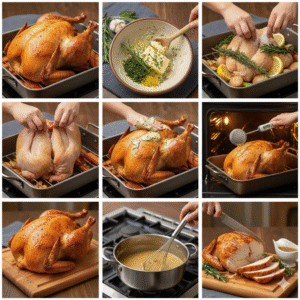
- Prep the turkey. Pat the turkey dry with paper towels, inside and out.Set on a rack in a roasting pan. Tuck the wing tips under the body. Let it sit at room temperature for 45–60 minutes to take the chill off.
- Make the herb butter. In a bowl, mix softened butter with chopped rosemary, thyme, sage, minced garlic, lemon zest, 1–2 tsp salt, and 1 tsp pepper.Stir until evenly combined.
- Season the cavity. Sprinkle salt and pepper inside the turkey. Stuff with onion quarters, lemon halves, a few herb sprigs, and a bay leaf. Don’t pack it tight—leave room for air to circulate.
- Loosen the skin. Gently slide your fingers under the skin over the breasts to create space.Be careful not to tear it. Spread about half the herb butter under the skin on both breasts and over the thighs if you can reach.
- Butter the exterior. Rub the remaining herb butter all over the outside. Drizzle with olive oil and season generously with salt and pepper.Scatter carrots and celery in the pan with the remaining bay leaf. Pour 2 cups of stock into the pan.
- Start hot, then lower the heat. Roast at 450°F (232°C) for 20 minutes to jump-start browning. Then reduce to 325°F (163°C) and continue roasting.
- Baste smartly. Every 30–40 minutes, baste with pan juices.If the pan dries out, add more stock. If the breast skin darkens too quickly, tent loosely with foil.
- Check temperature, not time. Begin checking after 2 hours. The turkey is done when an instant-read thermometer reads 160–165°F (71–74°C) in the thickest part of the breast and 170–175°F (77–79°C) in the thigh.For a 12–14 lb bird, plan on about 3–3.5 hours total, but trust your thermometer.
- Rest the turkey. Transfer to a cutting board and tent with foil. Rest for 30–45 minutes. This is key for juicy slices and easier carving.
- Make the gravy. Set the roasting pan over medium heat across two burners (or scrape drippings into a skillet).Skim excess fat, leaving a few tablespoons. Sprinkle in 1/4 cup flour and whisk to form a paste. Cook 1–2 minutes.Deglaze with wine if using, scraping up browned bits. Whisk in 2–3 cups stock until smooth. Simmer until thickened, 5–10 minutes.Season with salt, pepper, and a squeeze of lemon if needed.
- Carve and serve. Remove legs and thighs, then breasts, slicing across the grain. Serve with warm gravy and pan-roasted vegetables.
Keeping It Fresh
Store leftover turkey in airtight containers within two hours of serving. It keeps 3–4 days in the fridge or up to 3 months in the freezer.
Slice meat off the bones before chilling for faster cooling. Save the carcass and any extra drippings for stock or soup. Reheat gently with a splash of stock to keep it moist.
Why This is Good for You
Turkey is a lean source of high-quality protein, which supports muscle repair and helps you feel satisfied.
Roasting allows fat to render while keeping the meat tender. The herbs add antioxidants and big flavor without added calories. Using a homemade gravy means you control the salt and the thickness.
Pairing turkey with vegetables turns this into a balanced, nourishing meal.
Common Mistakes to Avoid
- Skipping the dry-off. Wet skin won’t crisp. Pat thoroughly before buttering.
- Not seasoning enough. Large birds need more salt than you think. Season the cavity and the exterior.
- Cooking by time alone. Ovens vary.Use an instant-read thermometer for accuracy.
- Carving too soon. If you skip the rest, the juices run out. Give it at least 30 minutes.
- Thin, bland gravy. Cook the flour for a minute to remove the raw taste, and scrape up all the browned bits.
- Overcrowding the cavity. Stuffing it tight leads to uneven cooking. Keep aromatics loose.
Recipe Variations
- Dry Brine Overnight: Rub 2–3 tbsp kosher salt mixed with 1 tsp baking powder and 1 tsp sugar over the turkey.Chill uncovered 12–24 hours. This boosts flavor and crispness.
- Citrus and Fennel Twist: Add orange zest to the butter and tuck fennel fronds and wedges in the pan. Finish gravy with a splash of orange juice.
- Smoky Paprika Butter: Stir 2 tsp smoked paprika and 1/2 tsp cumin into the herb butter for warmth and color.
- Maple-Mustard Glaze: In the last 20 minutes, brush a mix of 2 tbsp maple syrup and 1 tbsp Dijon over the skin for a shiny, slightly sweet finish.
- Gluten-Free Gravy: Swap flour for cornstarch.Whisk 1–2 tbsp cornstarch into cold stock, then add to drippings and simmer until thick.
FAQ
How do I thaw a frozen turkey safely?
Thaw in the fridge, allowing about 24 hours for every 4–5 pounds. Keep it on a tray to catch drips. If you’re short on time, submerge the wrapped turkey in cold water, changing the water every 30 minutes.
Plan on about 30 minutes per pound with the water method.
Should I truss the turkey?
Light trussing helps the bird hold a neat shape and cook evenly. Simply tie the legs together with kitchen twine. It’s not mandatory, but it makes carving and presentation easier.
Can I use dried herbs?
Yes.
Use about one-third the amount of dried herbs compared to fresh. Crush them between your fingers to release flavor before mixing into the butter.
What if my turkey is done early?
Tent it with foil and hold it in a warm place. It will stay hot for at least an hour after resting.
Rewarm the gravy just before serving, and add any resting juices for extra flavor.
How do I keep the breast from drying out?
Butter under the skin helps a lot. You can also shield the breast with foil once it reaches good color. Pull the turkey as soon as it hits the correct temperature and let it rest well.
Do I need a roasting rack?
A rack helps air circulate for even cooking and crisp skin.
If you don’t have one, set the turkey on a bed of chopped carrots, celery, and onions. They’ll act like a makeshift rack and flavor the drippings.
Can I make the gravy ahead?
Yes. Make a quick turkey or chicken stock a day or two ahead.
On the day of, warm it and whisk in the drippings and a roux to finish. This takes pressure off during the final rush.
What size turkey should I buy?
Plan for about 1 to 1.25 pounds per person. If you want leftovers, bump that to 1.5 pounds per person.
Smaller turkeys cook more evenly; for a big crowd, consider roasting two smaller birds.
Can I use salted butter?
You can, but reduce added salt elsewhere. Taste the gravy before seasoning to avoid oversalting.
How do I get ultra-crisp skin?
Let the turkey air-dry uncovered in the fridge for 12–24 hours after salting. Start with high heat, and don’t skip patting the skin dry.
A little baking powder in a dry brine also helps crispness.
Final Thoughts
This Roast Turkey with Herb Butter and Gravy is simple, reliable, and packed with flavor. With a few smart steps—good seasoning, butter under the skin, and careful temperature checks—you’ll get juicy meat and golden skin every time. Use the drippings for a lush gravy and you’ve got a centerpiece that feels both classic and special.
Keep the process relaxed, trust your thermometer, and enjoy the meal and the company around your table.