Traditional Irish Soda Bread – A Simple, Rustic Loaf with Heart
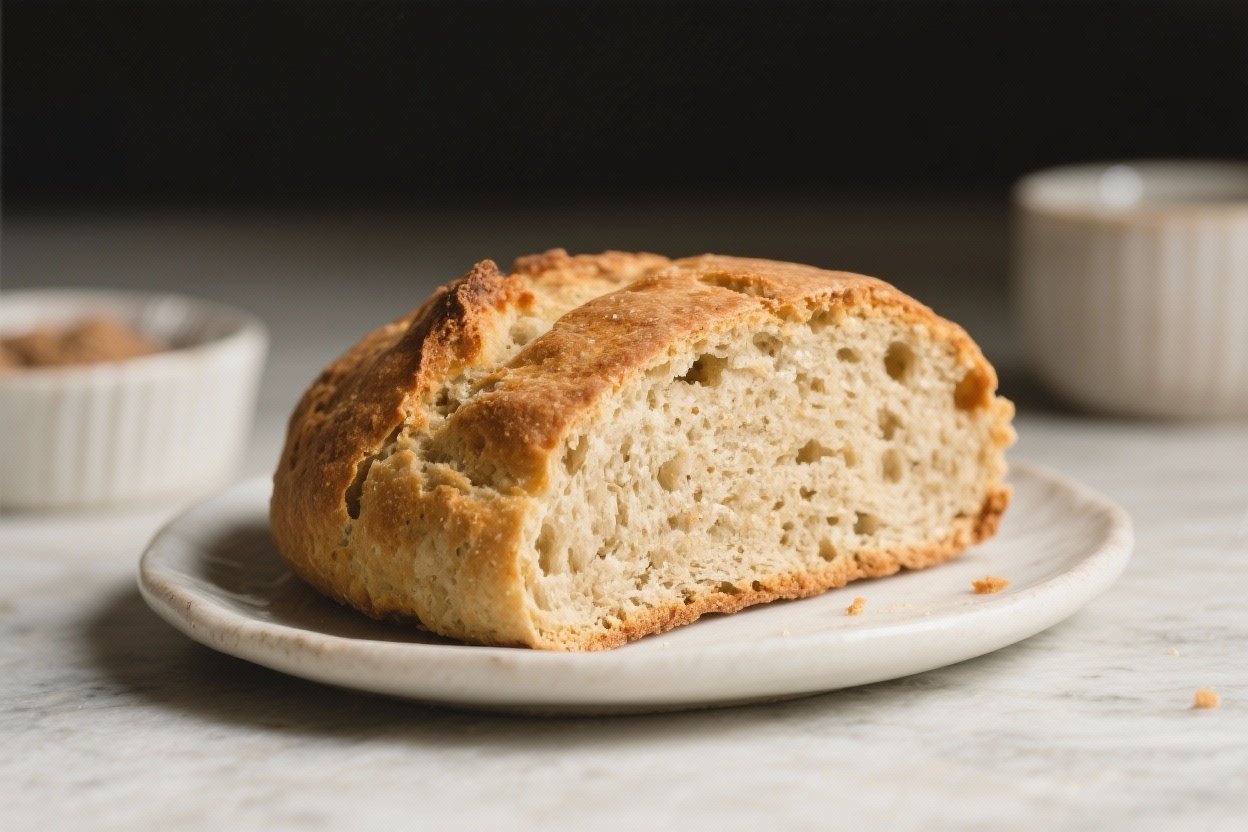
Irish soda bread is the kind of recipe that makes you feel at home, even if you’re far from it. It’s rustic, quick to make, and smells incredible while baking. With just a handful of pantry staples, you can have a warm loaf on the table in under an hour.
There’s no yeast, no kneading, and no stress. It’s the perfect bread for a bowl of soup, a breakfast spread, or a cozy afternoon treat with butter and jam.
What Makes This Recipe So Good
- Fast and foolproof: No yeast, no waiting. Mix, shape, bake, and you’re done.
- Made from simple pantry ingredients: Flour, baking soda, salt, and buttermilk are all you need.
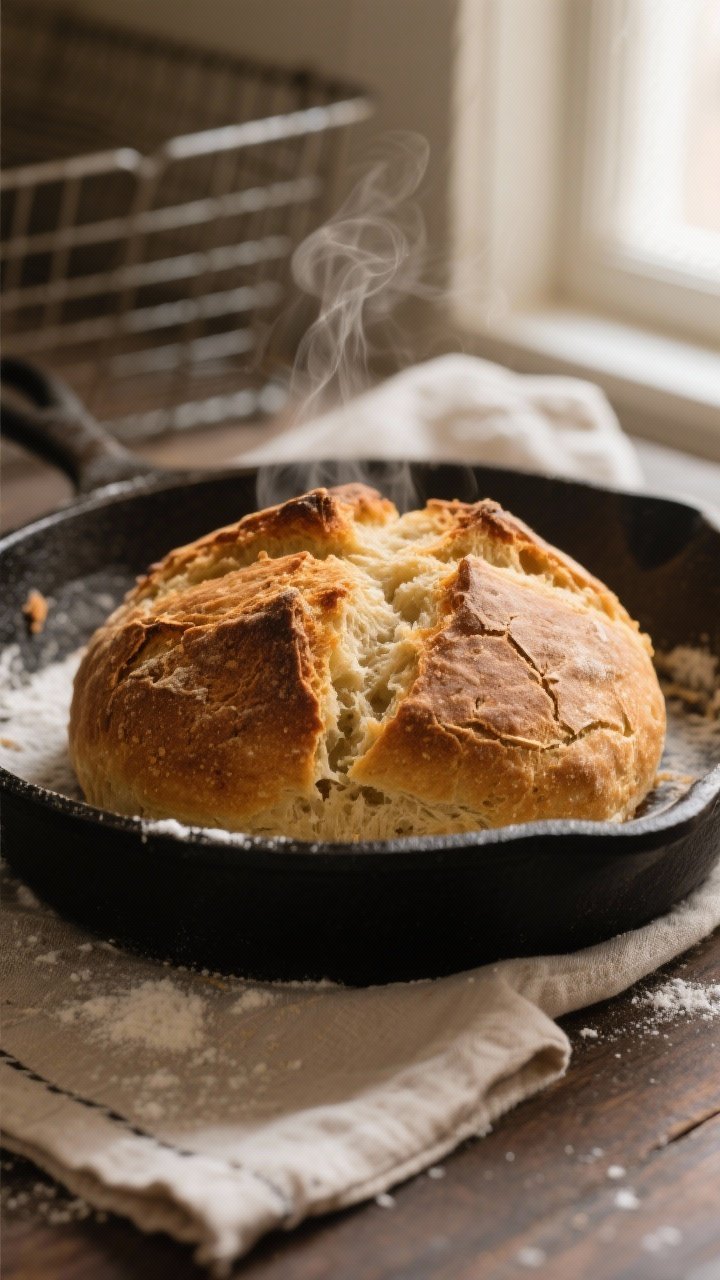
- Hearty texture with a tender crumb: It’s rustic on the outside and soft inside, just as it should be.
- Versatile: Enjoy it with butter, soup, stew, cheeses, or sweet spreads.
- True to tradition: This version keeps it classic—no sugar, no eggs, no extras, just the basics.
What You’ll Need
- All-purpose flour: 4 cups (plus a little extra for dusting)
- Baking soda: 1 teaspoon
- Fine sea salt: 1 teaspoon
- Cold buttermilk: About 1 3/4 cups (start with 1 1/2 cups and add more as needed)
- Optional for dusting: A little extra flour
That’s it.
Traditional Irish soda bread is built on these four essentials. If you don’t have buttermilk, see the FAQ for a quick substitute.
Step-by-Step Instructions

- Preheat the oven: Set it to 425°F (220°C). Line a baking sheet with parchment or lightly flour a cast-iron skillet.
- Mix the dry ingredients: In a large bowl, whisk together the flour, baking soda, and salt.Make sure the baking soda is evenly distributed.
- Add the buttermilk: Make a well in the center and pour in 1 1/2 cups buttermilk. Stir with a wooden spoon or your hand shaped like a claw. Add more buttermilk a splash at a time until the dough comes together.It should be soft, slightly sticky, and shaggy, not wet.
- Bring it together gently: Turn the dough onto a lightly floured surface. Knead very briefly—about 5 to 10 seconds—just until it forms a rough ball. Overworking will make it tough.
- Shape the loaf: Pat it into a round about 1 1/2 to 2 inches thick.Place it on the prepared sheet or skillet.
- Score the cross: Using a sharp knife, cut a deep cross on top, about 1/2 inch to 3/4 inch deep. This helps the heat reach the center and gives the bread its traditional look.
- Bake: Bake for 15 minutes at 425°F (220°C), then reduce to 400°F (200°C) and bake another 20 to 25 minutes. The loaf should be deeply golden and sound hollow when tapped on the bottom.
- Cool properly: Transfer to a wire rack and let it cool for at least 30 minutes before slicing.This allows the crumb to set.
Keeping It Fresh
Traditional soda bread is best the day it’s made. The crust is crackly, and the inside is tender. If you have leftovers, wrap the cooled loaf in a clean tea towel and store at room temperature for up to 2 days.
This helps keep the crust from turning leathery.
For longer storage, slice the bread and freeze it in a bag with the air pressed out. Toast slices straight from frozen. They crisp up beautifully and taste almost like fresh.
Health Benefits
- Short ingredient list: No additives or preservatives, just simple, real ingredients.
- Lower sugar: Traditional soda bread has no added sugar, making it a sensible choice compared to many store-bought breads.
- Calcium boost: Buttermilk provides a bit of calcium and protein.
- Customizable: You can swap in part whole wheat flour for extra fiber and a nuttier flavor.
What Not to Do
- Don’t overmix or overknead: Handle the dough as little as possible.Overworking develops gluten and makes the loaf tough.
- Don’t drench the dough: Add buttermilk gradually. The dough should be soft and slightly sticky, not soupy.
- Don’t skip the deep cross: It helps the center bake evenly and prevents a dense wedge in the middle.
- Don’t slice too soon: Cutting while hot compresses the crumb and makes it gummy. Let it rest.
- Don’t use old baking soda: If your baking soda is stale, the bread won’t rise well.Check the date.
Variations You Can Try
- Brown soda bread: Use half whole wheat flour and half all-purpose. You may need an extra tablespoon or two of buttermilk.
- Seeded loaf: Add 2 to 3 tablespoons of seeds (sunflower, pumpkin, flax) to the dry ingredients for crunch.
- Oaty version: Replace 1 cup of flour with quick oats for a chewy texture and gentle sweetness.
- Raisin and caraway (spotted loaf): Stir in 1/2 cup raisins or currants and 1 teaspoon caraway seeds. This leans toward the American-Irish style and is lovely with butter.
- Buttermilk substitute: Use 1 3/4 cups milk mixed with 2 tablespoons lemon juice or white vinegar.Let it sit 5 minutes to thicken and sour before adding.
FAQ
Is Irish soda bread supposed to be sweet?
Traditional Irish soda bread is not sweet. It’s lean and simple, made with flour, baking soda, salt, and buttermilk. Sweet versions with sugar, butter, eggs, or dried fruit are more common in American adaptations.
Why is it called “soda” bread?
The rise comes from baking soda reacting with the acidity in buttermilk.
That chemical reaction creates carbon dioxide, which lifts the dough without yeast.
Can I use self-rising flour?
You can, but skip the baking soda and reduce the salt. The flavor and texture will be slightly different, and you may still want a bit of acid (like a splash of buttermilk or yogurt) to promote tenderness.
How do I know it’s done?
The crust should be deeply golden. The loaf should sound hollow when tapped on the bottom.
If you have an instant-read thermometer, the center should reach about 200°F (93°C).
What if I don’t have buttermilk?
Make a quick substitute: Add 2 tablespoons lemon juice or white vinegar to a measuring cup, then fill to 1 3/4 cups with milk. Let it sit 5 minutes. You can also thin plain yogurt or kefir with a little water or milk until pourable.
Why is my bread dense?
Likely causes include overmixing, too little liquid, or old baking soda.
Mix gently, add enough buttermilk to create a soft dough, and use fresh leavening.
Can I bake it in a skillet?
Yes. A cast-iron skillet holds heat well and encourages a great crust. Lightly flour or line it, shape the dough, score, and bake as directed.
How long does it keep?
It’s best on day one.
It will keep for up to 2 days wrapped in a towel at room temperature. For longer storage, freeze slices and toast as needed.
Can I add butter to the dough?
You can rub in 2 to 3 tablespoons cold butter for a slightly richer crumb, but that’s a variation. Classic soda bread skips the fat.
What should I serve it with?
Butter and jam, sharp cheddar, smoked salmon, or a bowl of stew are all perfect.
It’s also great toasted with a smear of honey.
Wrapping Up
Traditional Irish soda bread is about simplicity and speed. With four basic ingredients and a light hand, you get a warm, crusty loaf in under an hour. Keep it classic, or try a variation that suits your table.
Either way, you’ll have a reliable, comforting bread that tastes like home. Warm slices, good butter, and you’re set.
Printable Recipe Card
Want just the essential recipe details without scrolling through the article? Get our printable recipe card with just the ingredients and instructions.